
5 Mistakes to Avoid With Bathroom Remodeling
The mistakes that sink most bathroom remodels aren’t design choices. They’re sequencing and scope failures that happen before a single tile gets set. In Los Angeles, permit requirements make these mistakes more expensive to unwind than almost anywhere else in the country. Fix the plan, not the grout.
If you’d rather skip the reading and just talk through your project, call (254) 276-4058 and we’ll walk you through it free.
Mistake #1: Skipping the Rough-In Inspection Before Locking Fixture Placement
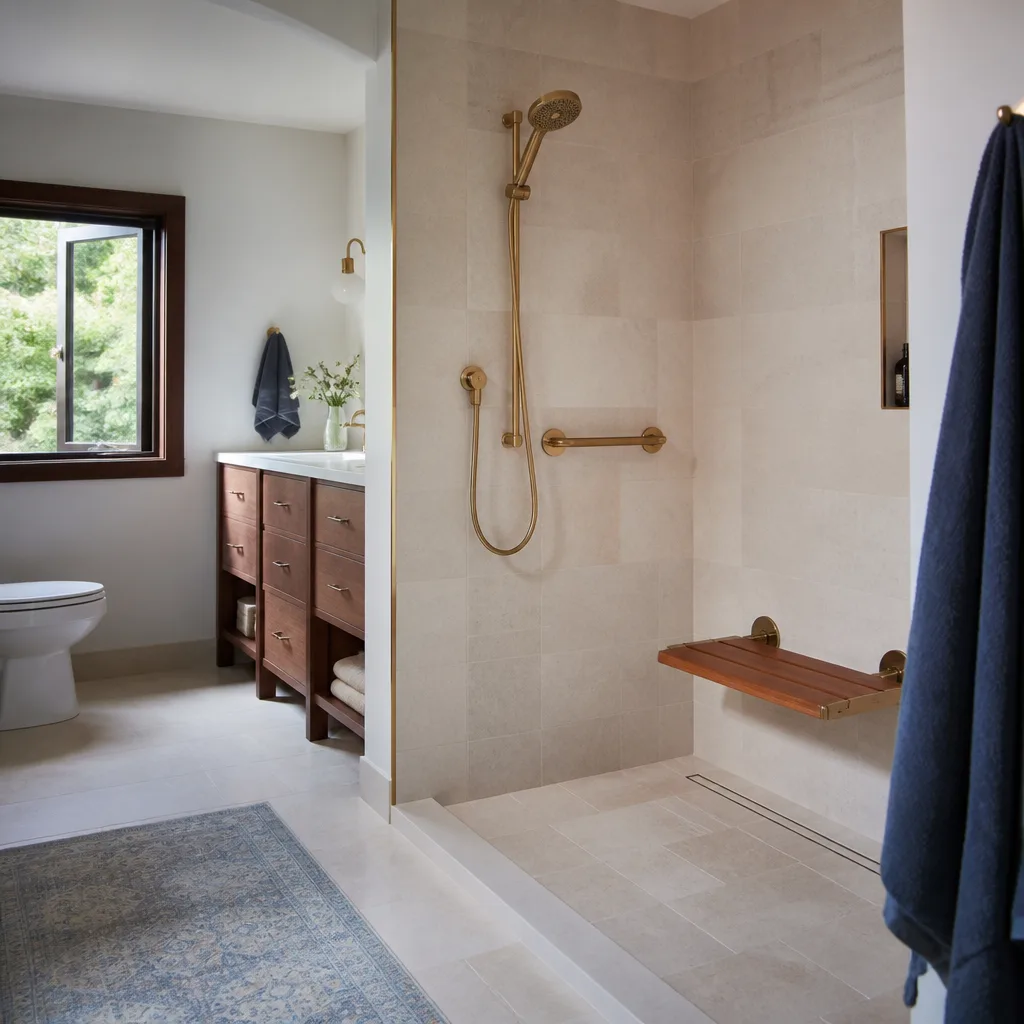
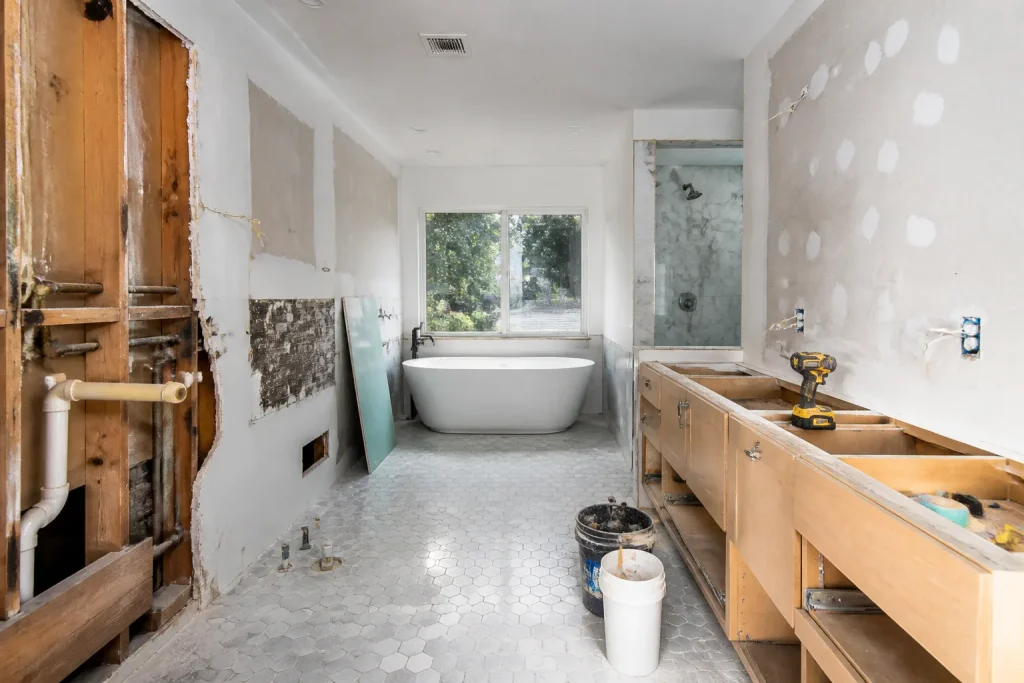
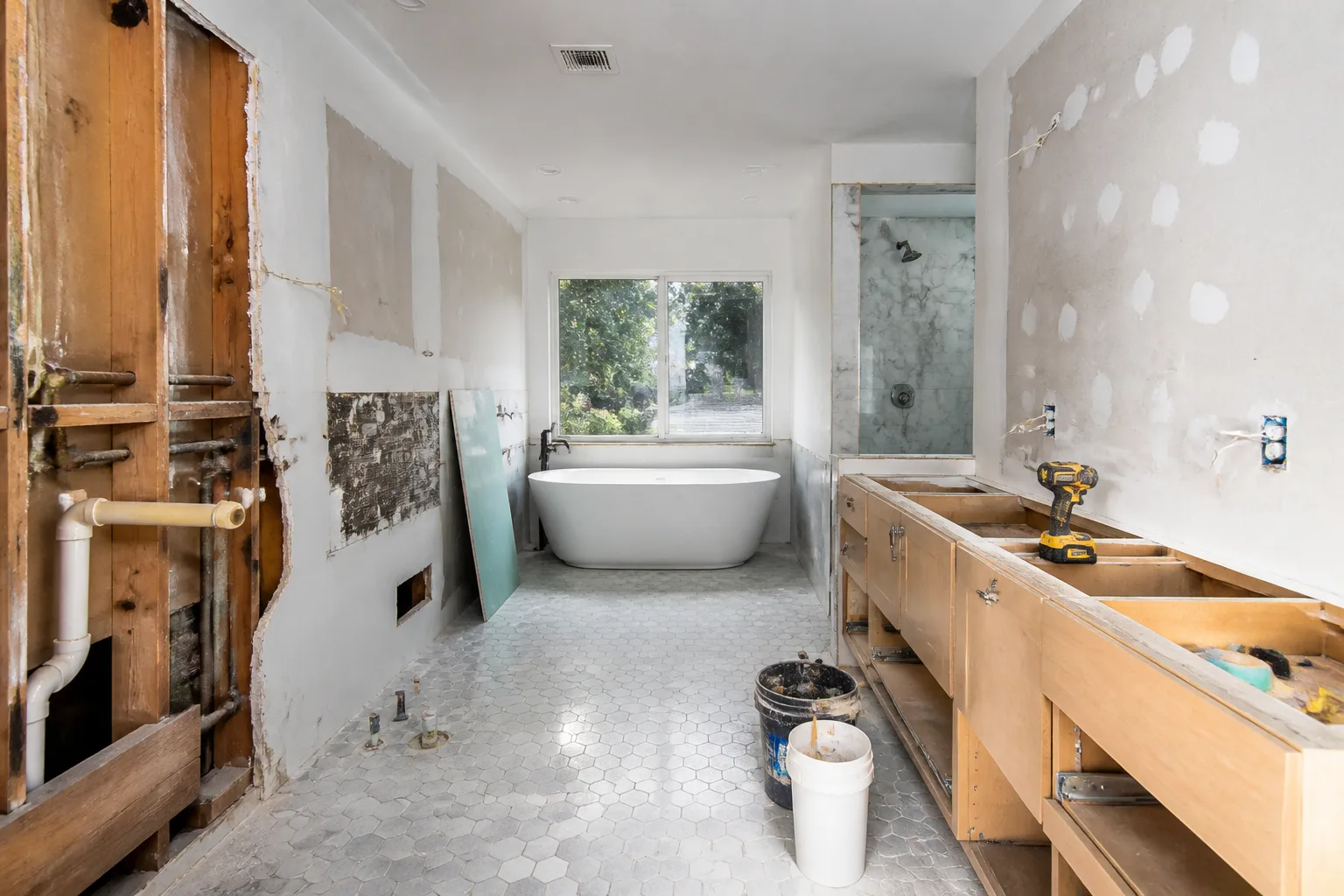
This is the mistake that causes the most expensive mid-project pivots we see in Los Angeles bathrooms. Here’s how it plays out: you pick a freestanding tub, a wall-mount vanity, and a rainfall showerhead. The design looks great on paper. Then demolition opens the wall and the drain line is three inches left of where the designer assumed it would be. Now you’re either moving plumbing, which means opening the slab or the wall cavity, or you’re redesigning around a pipe you didn’t know existed.
In LA, the fix gets complicated fast. Older homes, especially anything built before 1980, often have cast iron drain lines, galvanized supply pipes, or unpermitted work from previous owners. Moving a drain in a post-tension slab home, which is common across the San Fernando Valley and parts of the Westside, requires X-raying the slab before any cutting happens. That’s a two-week delay and a line item that wasn’t in the original bid.
The fix is simple: before finalizing fixture placement, do a rough-in inspection. That means opening the walls enough to see exactly where the drain, vent, and supply lines sit, then building the design around what’s actually there. A good contractor in Los Angeles will do this as the first step after demo, not as an afterthought once the tile order is already placed. We do this on every bathroom remodeling project in Los Angeles because the alternative is burning money on change orders.
Mistake #2: Underestimating LADBS Permit Timelines
Los Angeles Department of Building and Safety moves at its own pace. Plan check for a bathroom remodel that involves moving plumbing or electrical typically takes three to six weeks, sometimes longer during busy seasons. If you’re in a historic district or your home has any special overlay zoning, add more time. West Hollywood, Beverly Hills, Santa Monica, and Pasadena each have their own building departments with separate timelines, and if your project touches any of those jurisdictions, those rules apply instead.
Here’s what homeowners miss: the permit isn’t the expensive part. The hold time is. A contractor who’s already scheduled your demo and rough-in has to either hold their crew while waiting for the inspector, which means you’re paying for idle days, or they move to another job and your bathroom sits open for weeks. Neither is good.
The right move is to file for permits before demo starts, not after. Some contractors wait until the walls are open to file, which is backwards. The permit application can be prepared from the plans, and the inspection schedule can be built into the project timeline from day one. If you’re pulling a homeowners permit and managing the process yourself, expect to spend real hours at the LADBS office or navigating their online portal. If you want someone else to handle it, make sure it’s written into the scope before you sign.
Mistake #3: The Ventilation Miscalculation
LA homeowners assume the dry climate means mold isn’t a concern in a bathroom. That assumption fails the first winter you take a hot shower in a sealed room with no exhaust fan or a fan that’s never been ducted outside.
Here’s the reality: Los Angeles gets about 15 inches of rain a year, but the interior of your shower generates its own microclimate. A poorly vented bathroom in a stucco home with dual-pane windows, which describes most of the housing stock from Echo Park to Woodland Hills, traps moisture against drywall, behind tile, and inside the vanity. Mold grows in LA bathrooms all the time. It’s not a humidity problem. It’s a ventilation problem.
The building code requirement for bathroom exhaust is 50 CFM intermittent or 20 CFM continuous. That’s the minimum, and it’s often not enough for a master bath with a steam shower or a soaking tub. We spec 80 to 110 CFM fans in most LA master bathrooms, ducted all the way to the exterior, not into the attic. Ducting into an attic is against code, but it’s one of the most common shortcuts we see on older renovations. If you’re doing a gut remodel, now is the time to fix it, because once the ceiling is closed, you won’t see the mold until the drywall starts to stain.
While we’re on the subject of bathroom moisture, it’s worth thinking about the door too. A solid-core door with a proper threshold does more for humidity control than most people give it credit for. Brands like Therma-Tru make bathroom doors that seal tighter than the hollow-core slabs most builders install, which keeps steam from bleeding into your bedroom closet.
Mistake #4: Locking Tile Before Checking the Subfloor
Tile is the most tempting thing to pick first. It’s the part of the bathroom you see every day. But picking tile before confirming the subfloor condition is how you get cracked finished floors within a year.
In Los Angeles, this matters more than in most places for two reasons. First, we have earthquakes. A bathroom floor with deflection (movement under load) will crack grout joints and pop tiles in even a moderate shake. Second, a huge share of LA’s housing stock sits on raised foundations with dimensional lumber floor joists, and those joists move as the house settles. A tile installation laid over an inadequate subfloor doesn’t flex. It fails.
The spec that matters is deflection. For ceramic tile, the floor needs to meet L/360 deflection. For natural stone, it’s L/720, which often means adding a second layer of plywood or upgrading the joists. If the subfloor is too thin, the tile installer can put down all the cement board they want and the floor will still crack.
Before you order tile, open the floor and check what’s under it. If you’re on a slab, check for cracks and moisture. If you’re on a raised foundation, check the joist spacing and the subfloor thickness. Then buy the tile. Doing it in the other order means either returning tile that’s already been ordered or living with a floor that fails in year one. If you’re using a large-format tile, which is most of what we install in LA bathrooms now, the substrate matters even more. Big tiles have less tolerance for movement than small ones.
Mistake #5: The Low-Quote Trap and Missing Scope Statements
A bathroom remodel bid without a written scope statement is not a bid. It’s a starting point. The quote that comes in at $18,000 when three other contractors are at $30,000 isn’t cheaper. It’s incomplete.
Here’s what happens next. Demolition opens the walls and finds unpermitted plumbing from the previous owner. Or asbestos in the old flooring. Or a vent pipe that was never connected to anything. At that point, the low bidder comes back with a change order. The $18,000 bathroom is now $28,000, and you’re three weeks into a project you can’t reasonably abandon. The contractor knows it. You’re stuck.
This is where a written scope statement does the work. A real scope says exactly what’s included: what gets demolished, what gets rebuilt, what fixtures are specified, what the waterproofing system is, what the drywall finish level is, what the paint spec is. It also says what’s excluded, and it spells out how unknowns get handled. Some unknowns are real, but a good contractor in Los Angeles builds contingency language into the scope instead of letting it become a surprise.
Ask for the scope before you sign. If the contractor won’t put it in writing, that’s your answer. The number on the invoice should be the number you approved. Not a number that grew when the walls came open. That’s the whole reason Sawyer Remodeling runs every project under The Relay Visibility Guarantee: a written price before work starts, live arrival time tracking, and before-and-after photo updates. No surprises, no chase calls, no invoice that looks nothing like the estimate.
Key Takeaways
- Rough-in inspection before fixture placement saves the most expensive change orders.
- LADBS permits take weeks in Los Angeles. File before demo, not after.
- Ventilation is a code issue and a mold issue, even in a dry climate. Spec the fan and duct it outside.
- Confirm subfloor deflection before choosing tile, not after the tile arrives.
- Never accept a bid without a written scope statement. Low quotes become high change orders.
When to call a pro: if your remodel involves moving plumbing, electrical, or any load-bearing wall, this is not a DIY project. LA code enforcement is strict, unpermitted work gets flagged at resale, and the fix for a bad DIY bathroom costs more than doing it right the first time. We’ve seen enough unpermitted additions and retrofitted bathrooms across LA to know the patterns. A quick call is cheaper than a failed inspection.
Related services in Los Angeles: if your bathroom project is part of a larger plan, we also handle home renovation in Los Angeles and full general contractor services across the city.
The Bottom Line
Most bathroom remodel mistakes in Los Angeles are fixable at the planning stage and expensive to fix after walls are open. Sequence the project correctly: inspect the rough-in before finalizing fixtures, file permits before demo, design ventilation for the actual room, check the subfloor before ordering tile, and demand a written scope before signing anything. Do those five things in order and the remodel goes from stressful to straightforward.
If you’re in Los Angeles and want a written price before any work starts, Sawyer Remodeling offers free estimates. Call (254) 276-4058 and we’ll talk through your project, walk the site if it helps, and get you a real number before you commit to anything.
You can also start with our Sawyer Remodeling home page to see the full picture of how we work.
Frequently Asked Questions
A mid-range bathroom remodel in Los Angeles typically runs $25,000 to $50,000 depending on size, fixture choices, and how much plumbing gets moved. A small powder room can come in under $20,000. A large master bath with a curbless shower and freestanding tub can pass $60,000. The biggest cost variables are the waterproofing system, the tile, and whether you’re moving plumbing. Call (254) 276-4058 for an exact quote. Estimates are free.
A standard bathroom remodel in Los Angeles takes four to eight weeks, including demo, rough-in, inspection, waterproofing, tile, fixtures, and finish work. Permits add time on the front end: LADBS plan check typically runs three to six weeks before the first inspection is even scheduled. If the project moves plumbing or electrical, expect the full eight weeks. Call (254) 276-4058 to get a realistic timeline for your specific project.
If you’re moving plumbing, electrical, or walls, yes. Cosmetic work like replacing tile, paint, or a vanity without moving the drain or electrical doesn’t require a permit. But moving a drain, adding a circuit, or changing the floor plan does. Unpermitted work gets flagged during resale and can kill a sale. In our experience, it’s cheaper to pull the permit up front than to fix an unpermitted job after the fact.
An estimate is a number. A scope is a list of exactly what that number includes: demolition, framing, plumbing, electrical, waterproofing, tile, fixtures, paint, and finish work. Without a scope, an estimate can expand once the walls are open. With a scope, the number you approved is the number you pay. That’s the distinction we build into every Sawyer Remodeling project under The Relay Visibility Guarantee. Call (254) 276-4058 and we’ll show you what a real scope looks like.
Written by the team at Sawyer Remodeling.
Need Construction Help?
Call Sawyer Remodeling - licensed & insured, here with fast after-hours help in Los Angeles.
(254) 276-4058