Free written scope consultation - allowances, timeline, and change-order rules on paper before a single trade is scheduled
Tuff Shed Driveway & Pavers: The Los Angeles Owner’s Guide
If your Tuff Shed sits on a cracked, sinking, or heaved driveway or paver base in Los Angeles, we handle the repair and replacement work around it – and we can usually get it done within a week of your call, not a month. Most Tuff Shed owners in LA discover the problem the hard way: a door that suddenly sticks, water pooling against the shed’s foundation, or pavers that have shifted so badly the shed floor feels uneven when you step inside. The shed itself is usually fine. The ground under it isn’t.
We’re Sawyer Remodeling, and we’re an independent contractor – not affiliated with Tuff Shed – but we work on Tuff Shed sites across LA every season. What we see most often is a paver or concrete driveway that was poured years before the shed went in, and the two were never really designed to work together. Call (254) 272-5876 for a free estimate on your Tuff Shed driveway or paver repair in Los Angeles.
Which Tuff Shed Models This Applies To
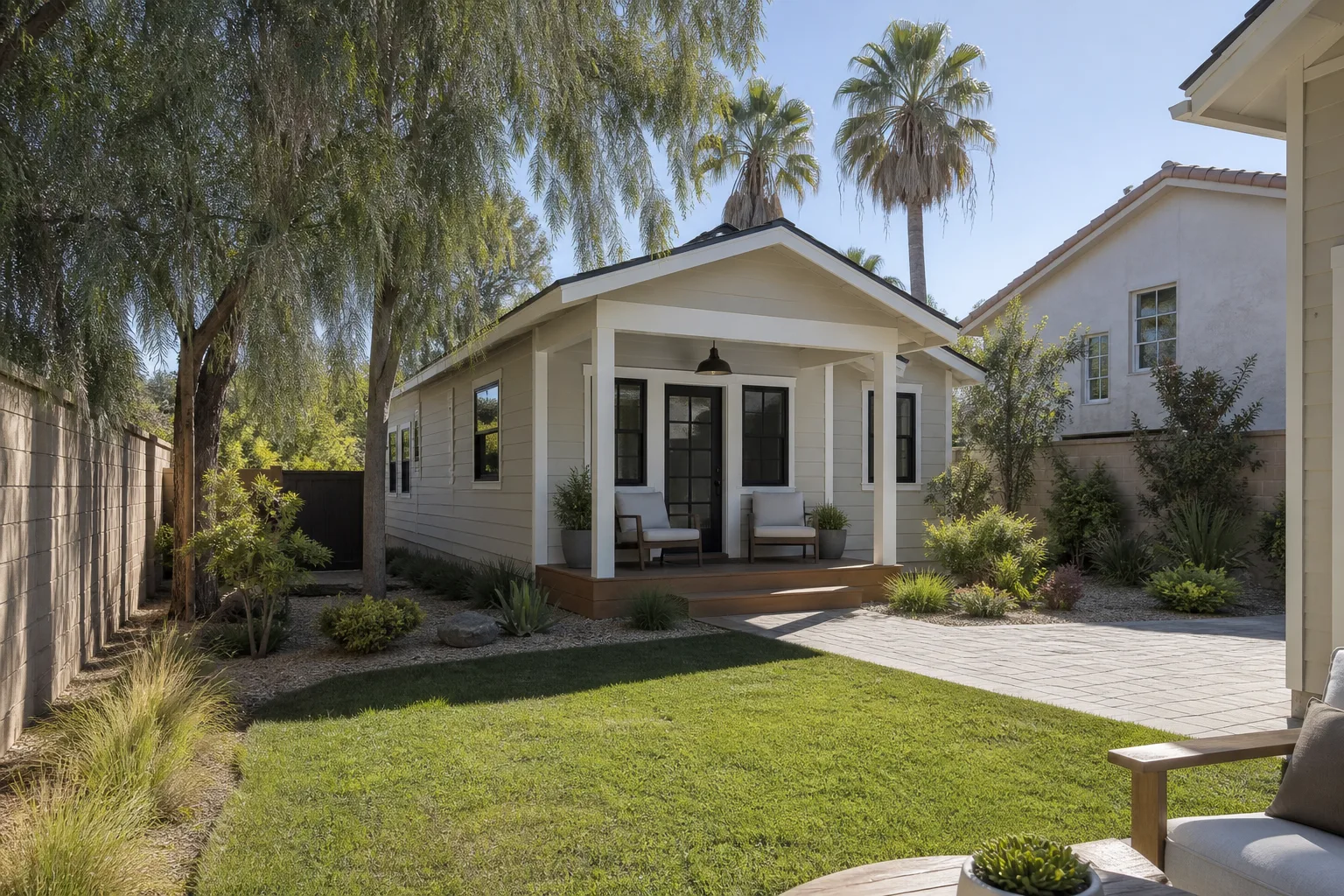
Tuff Shed builds a lot of different structures – the Premier Series, Pro Series, and Classic Series sheds, plus garages and custom barns – and the driveway or paver issue underneath them doesn’t care much about which series you own. What matters is the base. A Tuff Shed installed on a concrete slab has different failure points than one sitting on pavers, gravel, or bare compacted soil. If your shed sits on pavers, the pavers themselves are usually the weak link: LA’s clay-heavy soil expands and contracts with moisture, and over three to five years that movement loosens the sand joints and lets individual pavers drift. If it’s a concrete apron or driveway leading to the shed, the typical failure is a crack running right where the slab meets the shed’s metal foundation rails.
Figuring out what you have takes five minutes. Look for a Tuff Shed serial number plate on the inside wall near the door – it lists the model and production date, which helps us know what base the shed was designed for. For pavers, measure the paver thickness: most residential paver driveways in LA are 60mm Belgard or Calstone units, while thinner 40mm pavers get used for patios and fail faster under vehicle or shed weight. That’s a real compatibility gotcha we see weekly: a paver patio base that was never rated for driveway loads, now sitting under a Tuff Shed with a riding mower parked inside.
Styles & brands we work with
Signs Your Tuff Shed Driveway & Pavers Is Failing
- Water pools at the shed’s threshold after rain. This means the paver or concrete grade has settled away from the shed, which pulls water toward the foundation rails instead of away from them. In LA, even our light winter rains are enough to show this once the base shifts.
- The shed door catches or drags at the bottom corner. When pavers lift or a slab cracks, the shed frame itself is rarely the problem – the ground has moved underneath it. A door that shaved clean a year ago and now scrapes is the classic first symptom.
- Pavers rock when you step on them, or you see gaps opening between them. Loose pavers mean the sand bedding has eroded or washed out. Once one paver moves, the neighboring ones follow within months, and the whole field can shift like a slow-motion landslide under the shed’s weight.
- A crack in the concrete runs parallel to the shed wall, within a foot of the foundation rail. This is a shear crack from the shed’s concentrated load sitting on a slab edge. In LA’s dry-wet-dry clay cycles, that crack widens every year and eventually chips out the slab corner entirely.
- You feel a slight slope or bounce when walking inside the shed. The floor feels “off” because the base underneath has settled unevenly. Left alone, the shed frame starts transferring that stress into the wall studs, and doors fall out of square.
See the difference
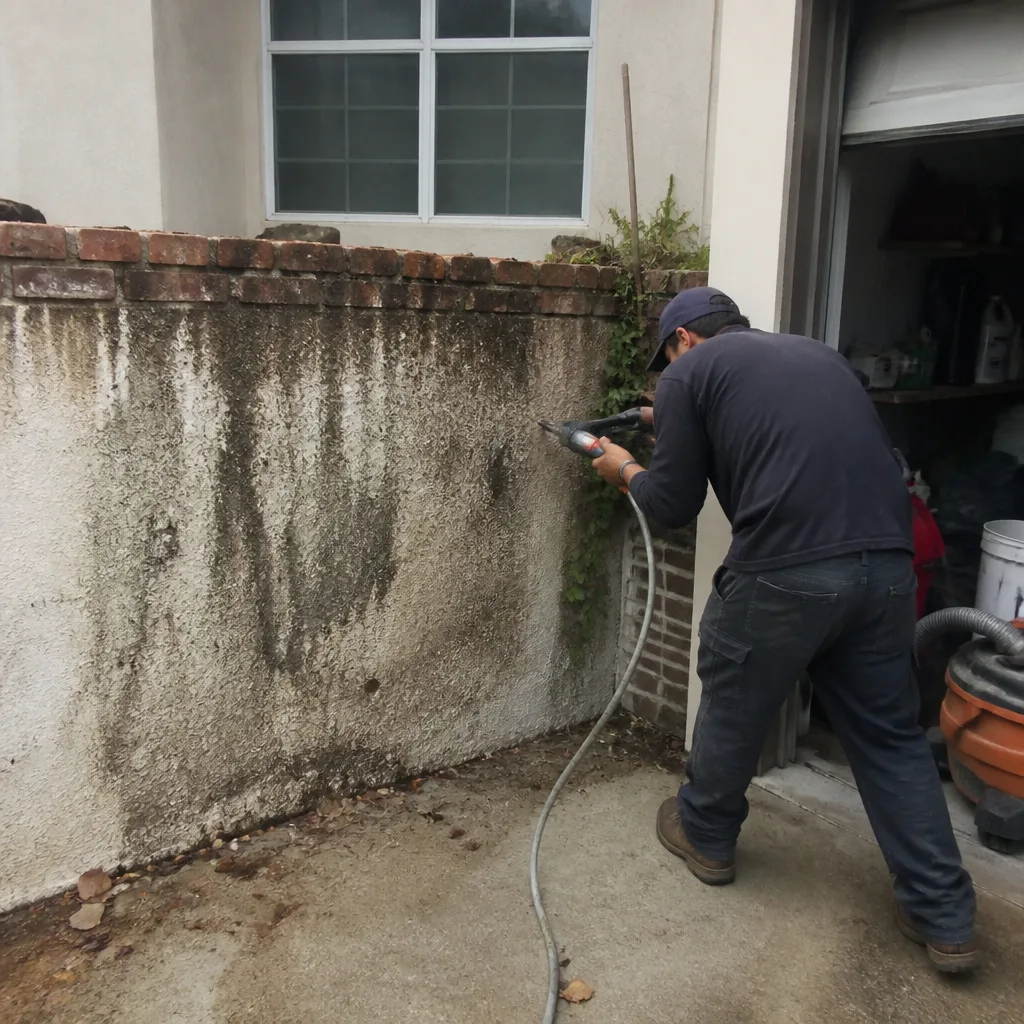 Before
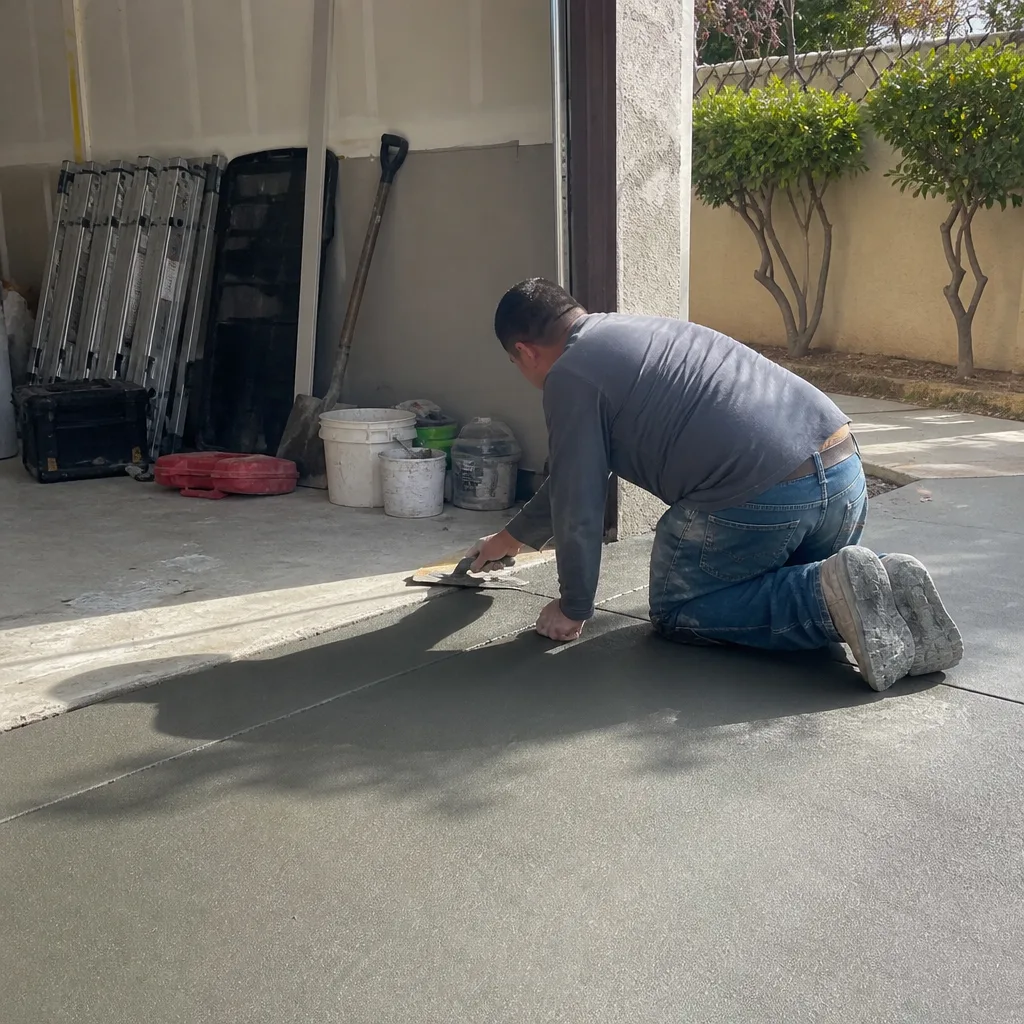 After
After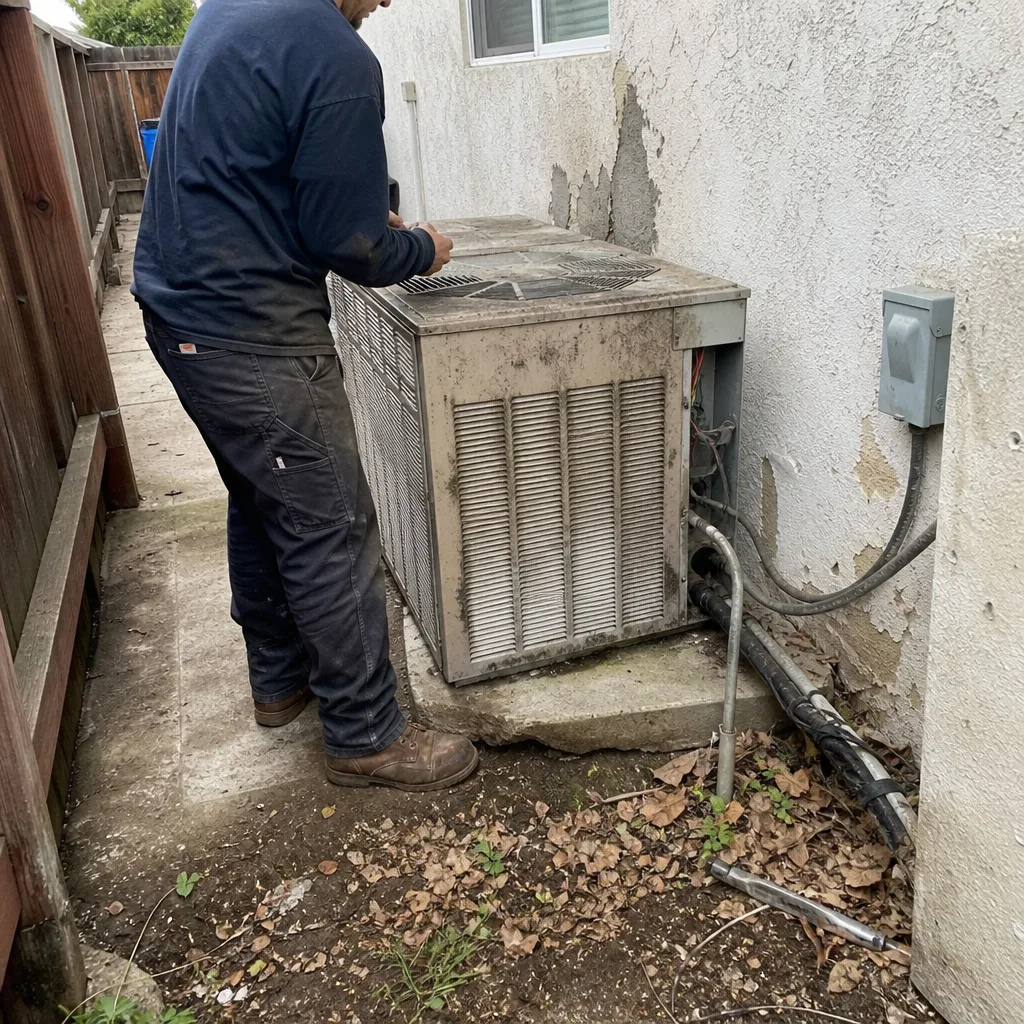 Before
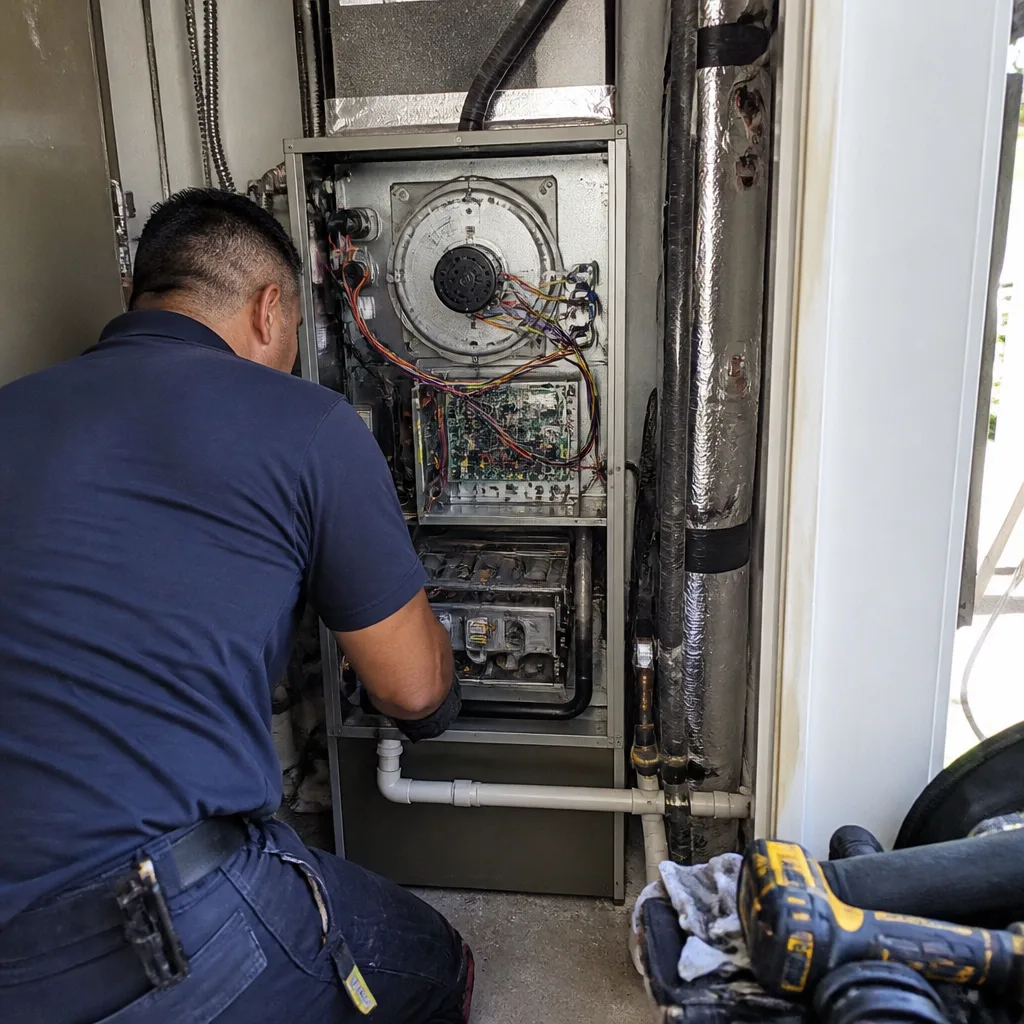 After
After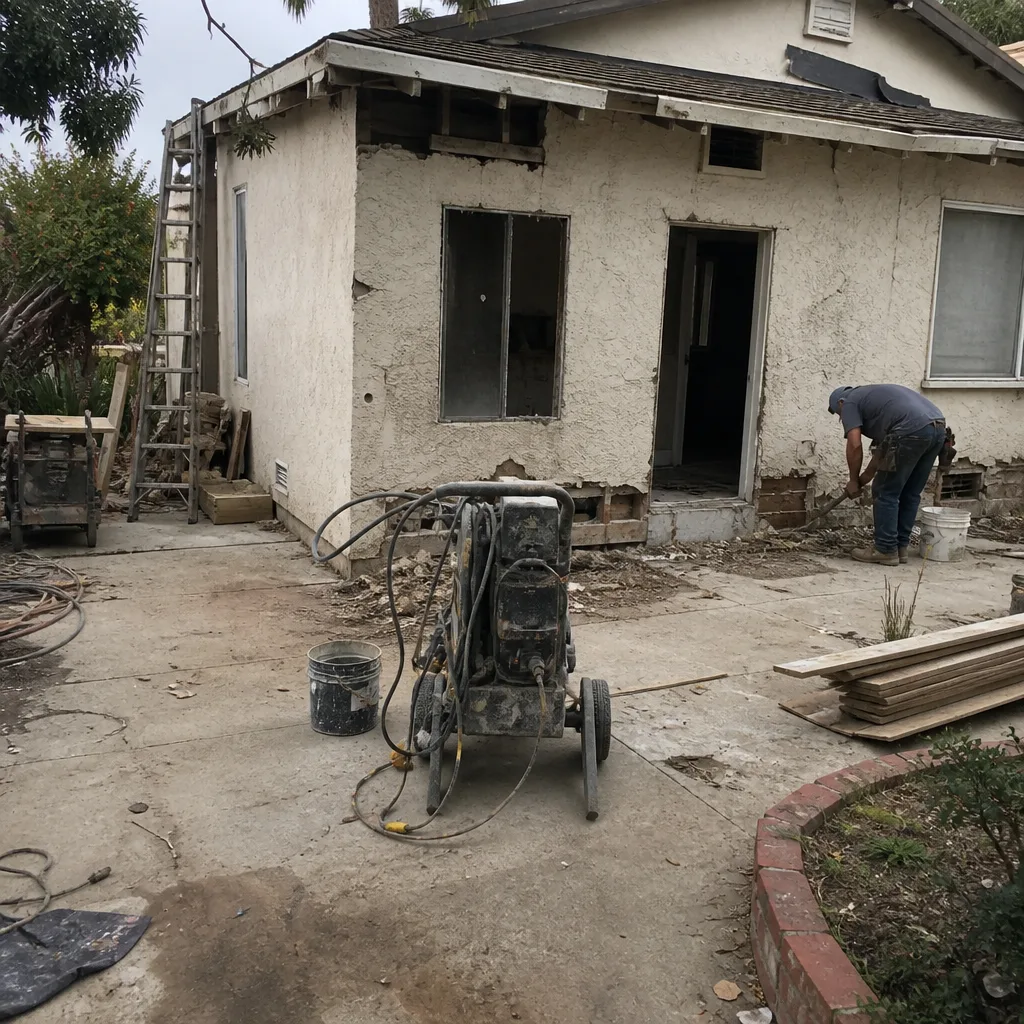 Before
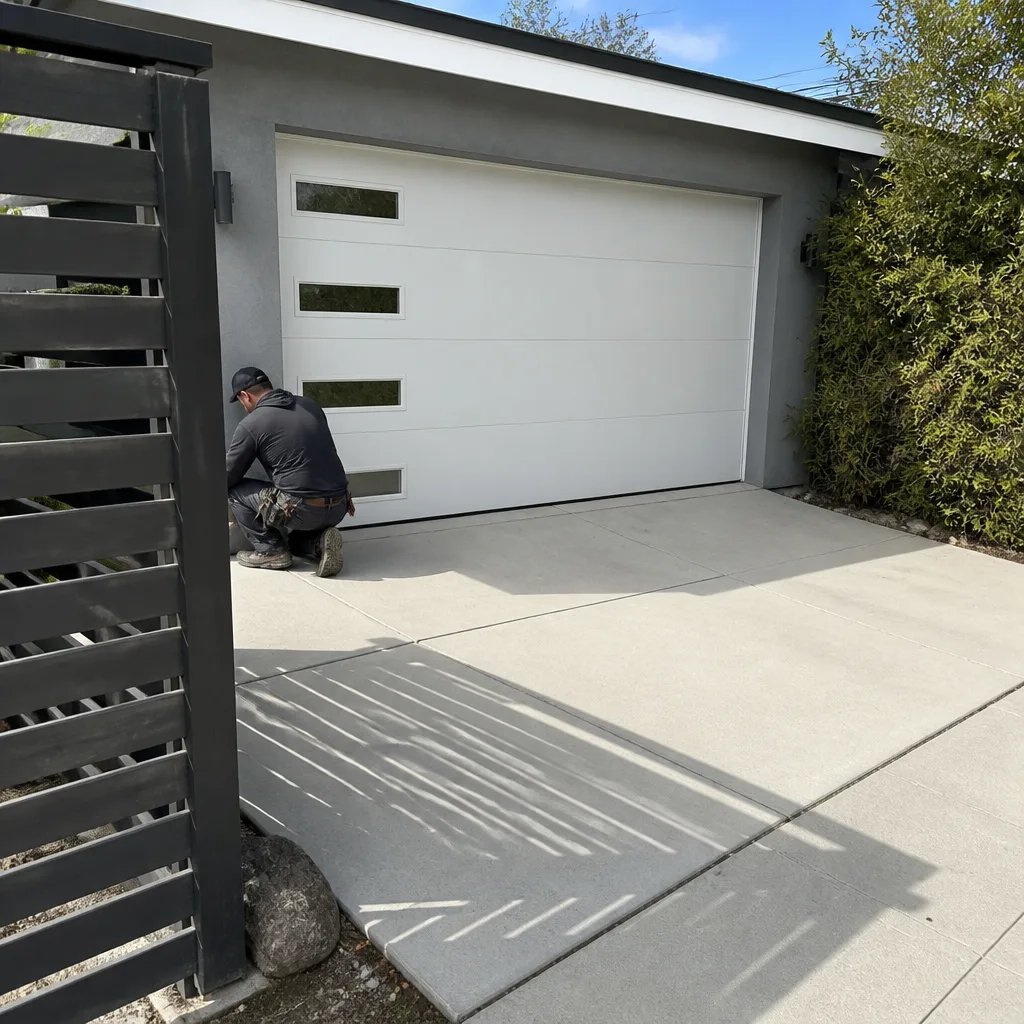 After
AfterReplacement Cost & What’s Included
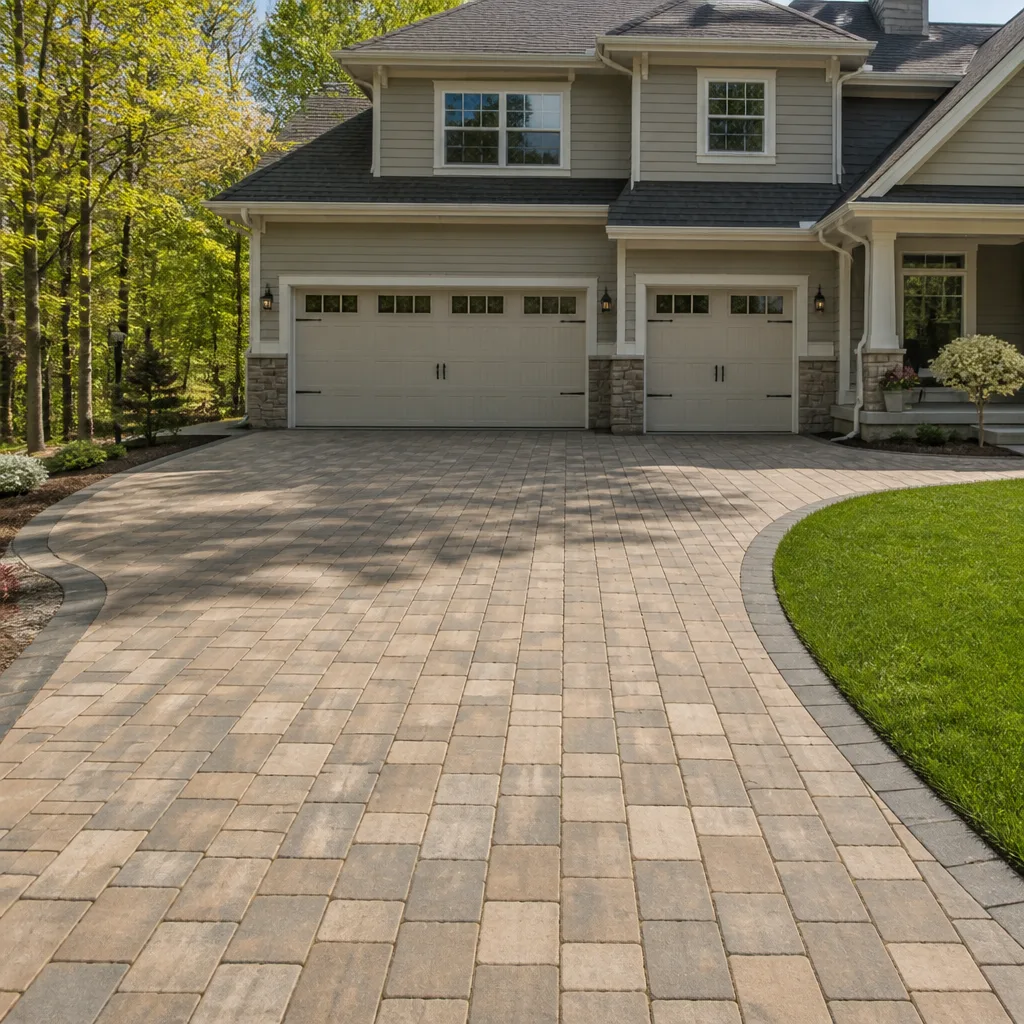
For a Tuff Shed driveway or paver repair in Los Angeles, you’re generally looking at $826 – $2,124 for paver spot repair (pulling up a section, re-leveling the base, re-laying pavers) and $4,130 – $12,980 for a full paver patio or driveway re-bed in front of the shed. A full new paver driveway installation runs $8,260 – $21,240 depending on square footage, paver choice, and base depth. Concrete driveway work near a shed typically lands between $5,310 – $14,160 for replacement sections or a new pour, with full driveway replacement at $5,900 – $16,520 in LA.
What drives the range? Three things: base preparation (a proper 4-6 inch compacted gravel base with geotextile fabric costs more than sand on dirt), paver quality (Belgard and Calstone both make 60mm driveway-rated units, and the price difference is real), and access (tight LA backyards with no machine access cost more than a wide-open front drive). Every job gets a written line-item price before we start – that’s the Relay Standard. You approve the number, and that’s the number on the invoice. Luca Romano, our owner, is the one who signs off on Tuff Shed site work specifically because he’s seen too many crews treat a shed base like a cosmetic paver fix when it’s actually a structural job.
DIY or Call Us?
Some things you can absolutely check yourself: look for the paver gaps, the door drag, the water pooling. Note where the worst spots are so you can point them out to us. But re-leveling a paver field under a Tuff Shed is not a weekend project. Pulling pavers, re-compacting base, re-setting each unit to grade, and re-sanding the joints requires the right compaction equipment and a laser level – and the shed’s weight means any small mistake gets amplified. If your shed sits on concrete and the crack is structural, breaking out and re-pouring a slab section is absolutely a professional job. There’s no high-tension spring or electrical hazard here, but there is a slow-motion failure risk: a base repair done wrong means you’ll pay twice when it fails again in two years.
If you want it done right the first time in Los Angeles, call (254) 272-5876. Good work doesn’t need a sales pitch – it just needs to be done right.
FAQs
A properly built paver base under a Tuff Shed in LA lasts 15 to 25 years; a poorly built one can fail in three. The difference is almost always the base depth and whether a geotextile fabric was laid between the soil and the gravel. Call (254) 272-5876 and we’ll tell you honestly which one you have.
Yes – if the pavers themselves are intact and the failure is localized, we can spot-repair sections for $826 – $2,124 in Los Angeles rather than re-doing the entire field. If the pavers are cracked or the base has failed across the whole shed footprint, replacement is usually cheaper than patching piecemeal.
Most Tuff Shed paver repairs in Los Angeles take one to two days; a full paver driveway re-bed or new installation runs three to five days depending on access and square footage. You’ll get a written schedule and photo updates before and after, so you’re never guessing when we’ll show up.
We stock common 60mm paver units, bedding sand, gravel, and geotextile on our trucks, and we can source Belgard and Calstone pavers matched to your existing field within a day or two in Los Angeles. We don’t sell Tuff Shed brand parts – Tuff Shed doesn’t manufacture pavers or driveway materials – but everything we install is manufacturer-backed and spec’d for the load your shed puts on it.
We also work with several material partners across our projects, including KraftMaid, Cambria, and Silestone when a Tuff Shed job turns into a broader remodel.
Written by Luca Romano, Owner, Sawyer Remodeling at Sawyer Remodeling, serving Los Angeles and nearby areas.