Last updated October 9, 2026








Free written scope consultation - allowances, timeline, and change-order rules on paper before a single trade is scheduled
General Contractor Maintenance Checklist for Los Angeles Homeowners
A roof that holds up fine in Phoenix can fail in Los Angeles because of something most homeowners never think about: the marine layer cycling moisture into wood framing night after night. LA’s climate is a strange beast. The city gets roughly 15 inches of rain a year, yet homes here face moisture problems you’d expect in far wetter places. Dry heat bakes exterior caulking until it cracks, Santa Ana winds sandblast paint off south-facing walls, and that nightly fog works its way into places rain never touches. This guide is built for what actually happens to homes in Los Angeles, not a more guides & resources approach that treats every climate the same.
Quick Answer
A General Contractor Maintenance Schedule: What to Do and When needs to focus on five things most generic guides skip: marine layer moisture damage to wood and caulking, post-Santa Ana wind inspections, stucco crack protocol, foundation checks tied to expansive clay soil, and ember-resistant attic venting in wildfire zones. Do these checks twice a year, plus immediately after any Santa Ana event over 40 mph, and you’ll catch most problems before they become five-figure repairs.
Styles & brands we work with







Table of Contents
- The Marine Layer Problem: What Fog Does to Your Home
- Santa Ana Wind Inspections: Beyond Fallen Branches
- Stucco Inspection Protocol for LA’s Dominant Exterior
- Foundation Checks for LA’s Expansive Clay Soil
- Ember-Resistant Venting and Wildfire Zone Checks
- Plumbing and Water Heater Checks for Hard Water Homes
- Roof, Gutter, and Drainage Checks for LA’s Rain Patterns
- Common Mistakes to Avoid
- When to Call a Professional
- Frequently Asked Questions
The Marine Layer Problem: What Fog Does to Your Home
If you live west of the 405, you know the drill. From May through August, the marine layer rolls in most evenings and burns off by mid-morning. That fog carries moisture at 80 to 95 percent relative humidity, and it does something rain doesn’t: it lingers. Rain hits and runs off. Fog sits on surfaces for six to ten hours at a stretch, seeping into any gap, crack, or seam it can find.
In our experience as a general contractor in Los Angeles, the damage pattern is consistent. Homes in Venice, Mar Vista, Playa del Rey, and the Palisades show caulking deterioration two to three years faster than homes in the Valley. Window trim swells and contracts nightly. Unpainted wood fascia boards start showing soft spots within a decade. Exterior paint on west-facing walls chalks and peels far earlier than the label claims.
Here’s what to check every spring and fall:
- Run a finger along caulk lines around windows and doors. If it’s stiff, cracked, or pulling away from the surface, it’s failing. Marine layer moisture gets behind it and sits against the framing.
- Check the bottoms of exterior door frames and window sills for soft wood. Press a screwdriver tip gently into the wood. If it sinks in, you have rot starting.
- Look at exterior paint on the north and west sides of the house. Chalking (powdery residue when you rub it) means the paint film has broken down and water is reaching the substrate.
- Inspect any exposed wood: eaves, fascia boards, porch posts, trellises. Discoloration or fine cracks are early signs the marine layer is doing its work.
For homes within five miles of the coast, we recommend repainting exterior wood surfaces every five to seven years, not the seven to ten you’d get away with in Burbank or Pasadena. Use a high-quality acrylic latex with a mildewcide additive. The marine layer encourages mildew on shaded surfaces even when nothing leaks.
The fix for failing caulk is straightforward: remove the old bead completely, clean the joint with denatured alcohol, and apply a high-grade elastomeric caulk like OSI Quad Max. It flexes with the daily expansion and contraction cycle that fog drives. Standard painter’s caulk will crack again within two years.
Santa Ana Wind Inspections: Beyond Fallen Branches
Every fall, the Santa Anas come through. Sustained winds of 40 to 60 mph, gusts over 80 in the passes and canyons. Most homeowners do a quick yard check for fallen branches and call it done. That’s the bare minimum, and it misses the real damage.
Santa Ana winds hit your house differently than a storm. They’re dry, hot, and relentless. They don’t just knock things over; they work fasteners loose, lift shingle edges, and drive fine dust and debris into every exterior gap. After a wind event over 40 mph, walk your property with this checklist:
- Check roof flashing around chimneys, vents, and skylights. Wind-driven sand acts like a sandblaster, and loose flashing is the first thing to fail.
- Look at the edges of your roof. Do any shingles or tiles look lifted or misaligned? A single lifted shingle edge becomes a tear-off point for the next wind event.
- Inspect fence posts and gates for lean. The combination of dry soil and wind pressure loosens post footings over time.
- Examine window screens and exterior vents. Blown screens let embers in during fire season, and clogged dryer or attic vents reduce airflow.
- Check stucco overhangs and parapet caps. Wind-driven debris chips stucco edges, and once the surface is breached, moisture gets in.
- Walk your roofline from the ground with binoculars. Look for any tile or shingle that’s shifted more than an inch. Wind damage rarely announces itself with an obvious hole.
Los Angeles homeowners in the hills and canyon areas need to be especially thorough. The San Fernando Valley and the foothill neighborhoods along the 210 corridor take the brunt of the wind. If you live in Porter Ranch, Granada Hills, Sunland, or La Cañada, check after every event, not just the big ones.
One thing people rarely think about: Santa Anas dry out the soil around your foundation. Extended wind events in October and November, after months of no rain, can pull enough moisture out of the ground to cause visible cracking at soil level. Make foundation checks part of your post-wind routine, not just your rainy-season routine.
Stucco Inspection Protocol for LA’s Dominant Exterior
Most Los Angeles homes are stucco. Walk any street in Mid-City, West Adams, or the east side and you’ll see it everywhere. Stucco is a great material for this climate, but it needs a different inspection approach than wood siding. And most homeowners don’t know what to look for.
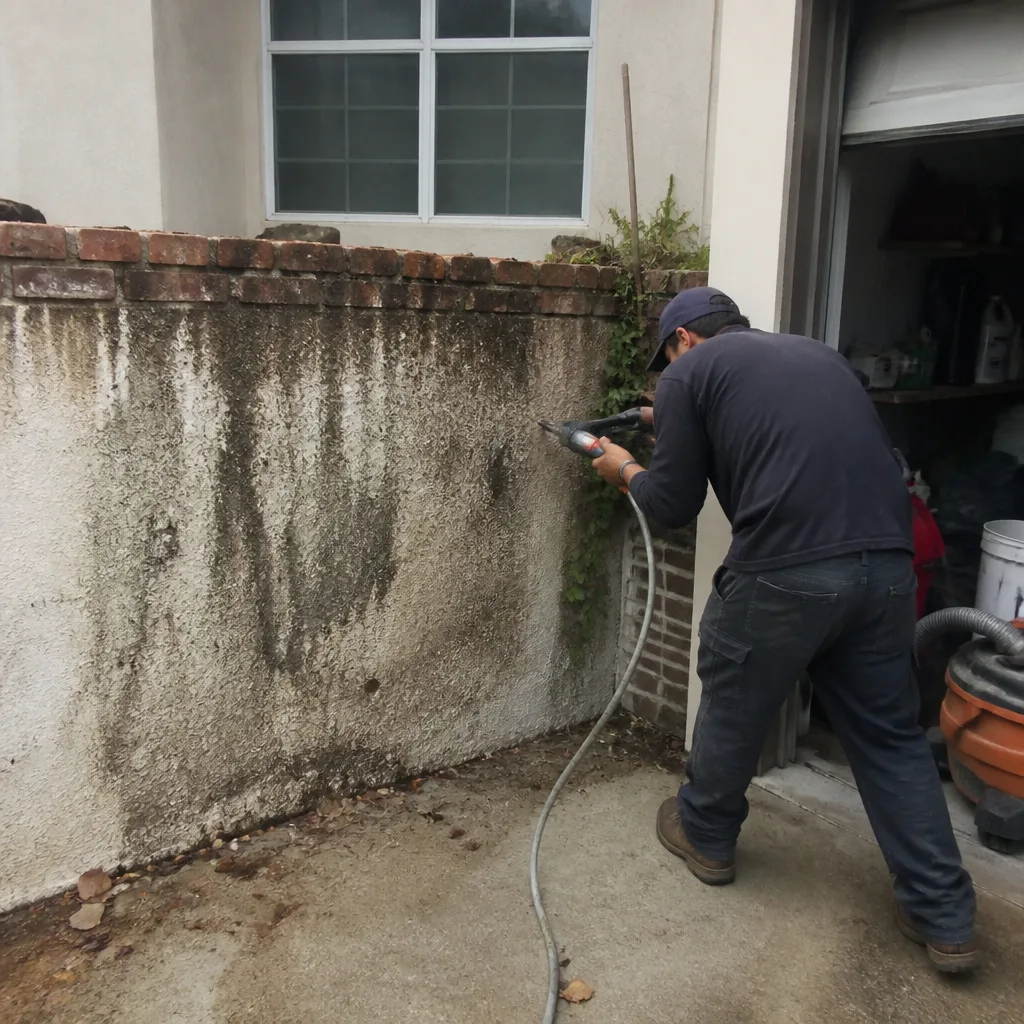
Here’s the thing about stucco: it’s a rigid material. It doesn’t flex. When a house settles, or when framing expands and contracts with moisture cycles, the stucco doesn’t move with it. It cracks. That’s normal up to a point. Hairline cracks under 1/16 inch are cosmetic and can be sealed with elastomeric caulk. But anything wider, or any crack that runs in a stair-step pattern, is worth a closer look.
Your stucco inspection should cover:
- Cracks wider than 1/16 inch. These can admit water, and once water gets behind stucco, it has no easy way out. It sits against the framing and does silent damage.
- Stair-step cracks. Cracks that follow the mortar joints in a staircase pattern often indicate foundation movement, not just surface stress. In Los Angeles, where much of the soil is expansive clay, this is worth evaluating sooner rather than later.
- Stucco that’s pulling away from window or door frames. This gap is an open invitation for moisture and insects.
- Soft or flaking stucco at ground level. Sprinkler overspray and soil contact keep the bottom six inches of stucco wet, which leads to efflorescence (white mineral deposits) and eventual deterioration.
- Weep screed blockage. The weep screed is the metal flashing at the base of the stucco wall. Make sure it’s not buried in soil or covered by mulch. It exists to let moisture drain out of the wall system.
When you do need stucco repairs, the patch has to match the existing texture or the repair looks worse than the original damage. That’s a skill, not a given. We’ve seen homeowners try to patch stucco with standard mortar and end up with a color and texture that screams “patch” from the curb.
The key to stucco longevity in LA is keeping moisture away from the base and sealing cracks while they’re still small. A tube of elastomeric caulk costs about $12. Letting a crack go for two years can mean re-stuccoing a whole wall at $8 to $15 per square foot.
Foundation Checks for LA’s Expansive Clay Soil
Los Angeles sits on some of the most expansive clay soil in the country. If you live in the Valley, in neighborhoods like Van Nuys, Reseda, or Northridge, your foundation is dealing with soil that swells when wet and shrinks when dry. Over years of wet winters and bone-dry summers, that movement adds up.
The cycle works like this: winter rains saturate the clay, it expands, and it pushes against your foundation. Summer heat dries it out, the clay contracts, and it pulls away. This happens every year. The damage is slow, but it’s cumulative. Foundations crack, floors slope, doors stop latching.
Here’s a foundation check you can do in 30 minutes, twice a year:
- Walk the exterior perimeter. Look for vertical or diagonal cracks in the exposed foundation wall. Hairline cracks are common and often not structural. Cracks wider than 1/8 inch, or cracks that are wider at the top than the bottom, deserve professional evaluation.
- Check interior doors. Do any doors stick, rub, or fail to latch? That can indicate floor settlement.
- Look for uneven floors. Put a marble or a round pen on the floor and see if it rolls. In an older LA home, some slope is expected. A sudden change is not.
- Inspect the soil around the foundation. Is there a visible gap between the soil and the foundation wall? That means the clay has contracted and pulled away, which allows water to run down the foundation during the next rain.
- Check for cracks around window corners and at wall-ceiling junctions inside. Fresh drywall cracks that appear after a rainy season are often a sign the foundation moved.
The most important preventive measure in Los Angeles is maintaining consistent soil moisture. That doesn’t mean flooding the foundation. It means keeping the soil from extreme swings. Proper drainage, gutter downspouts that carry water at least five feet from the foundation, and not letting sprinklers soak the same spot day after day all help.
If you do find evidence of foundation movement, don’t ignore it. Foundation repairs in Los Angeles run anywhere from $5,000 for minor crack injection to $40,000 or more for full piering systems. Catching a drainage problem early costs a few hundred dollars and a Saturday afternoon.
Ember-Resistant Venting and Wildfire Zone Checks
A significant portion of Los Angeles sits in or near wildfire interface zones. Neighborhoods in the Hollywood Hills, Bel Air, Sherman Oaks, Studio City, and the entire stretch along the 210 corridor face real fire risk every fall. And most homeowners focus on the wrong things. They clear brush and call it done. Those are important, but the way houses actually burn in wildfires is through embers getting into the home.
Embers don’t need a direct flame path. They ride the wind for miles, land on your roof, collect in your gutters, and get sucked into attic vents. Once they’re inside the attic, the house goes up from the inside. This is the single biggest vulnerability most Los Angeles homes have.
Here’s what to check, ideally every September before fire season peaks:
- Attic vents. Standard attic vents have openings large enough for embers to pass through. Ember-resistant vents, also called WUI (wildland-urban interface) vents, have fine mesh that blocks embers while still allowing airflow. They cost $15 to $40 per vent and take minutes to install. This is the highest-value wildfire upgrade you can make.
- Gutter debris. Dry leaves, pine needles, and twigs in gutters are perfect ember fuel. Clean gutters in late fall and again after any significant wind event.
- Roof material and condition. If you have wood shake or shingle roofing, you already know it’s a problem. But even composition shingles with cracked or curled edges create gap points where embers can lodge. Replace damaged shingles before fire season.
- Under-eave gaps. Look for gaps where the roof deck meets the fascia boards. These gaps let embers into the attic space. Seal them with a fire-rated caulk or foam.
- Deck and patio storage. Firewood, lumber, and boxes stored against the house or under decks are ember landing pads. Move them at least 30 feet from the structure during fire season.
- Window screens. Blown-in or missing window screens during a fire event let embers into the house through open windows. Repair screens before September.
Some LA neighborhoods are in designated Very High Fire Hazard Severity Zones, which triggers additional code requirements for renovations and new construction. Even if your home isn’t in a designated zone, embers respect no boundary lines. The vent screening is cheap insurance.
For roof replacements in fire-prone Los Angeles neighborhoods, we steer clients toward Class A fire-rated materials. Brands like CertainTeed and Owens Corning make composition shingles that carry Class A fire ratings, which is the top rating available. If you’re replacing a roof, it’s worth the conversation with your contractor.
Plumbing and Water Heater Checks for Hard Water Homes
Los Angeles has some of the hardest municipal water in the country. The Metropolitan Water District reports hardness levels between 150 and 300 parts per million depending on the source, and imported Colorado River water runs even harder. What does that mean for your home? Scale builds up in pipes, water heaters, and fixtures. It shortens appliance life and reduces water pressure.
A water heater in a hard-water home lasts 8 to 12 years, compared to 12 to 15 years in regions with softer water. The difference is the sediment that accumulates at the bottom of the tank. A half-inch of scale on the tank floor insulates the bottom from the burner, which means the heater works harder, runs hotter, and cracks the glass lining faster.
Add these checks to your maintenance routine:
- Flush your water heater annually. Attach a garden hose to the drain valve at the bottom, run it to a drain or outside, and let it flow until the water runs clear. If you’ve never done this and the heater is five years old, do it sooner. If sediment has hardened, it may be too late, but a flush is still worth trying.
- Test the TPR valve. The temperature-pressure relief valve is the safety device that prevents the tank from exploding. Lift the lever briefly. You should hear a rush of water or air. If it doesn’t reseat, replace it. A failed TPR valve on a 200-degree tank is a serious problem.
- Check supply lines on toilets and sinks. Braided stainless steel lines last much longer than the old plastic or rubber ones, but they still need a glance. Look for corrosion at the connection points.
- Look under sinks for slow drips. A drip that loses a gallon a day wastes 365 gallons a year. With LA water rates, that’s real money.
- Check outdoor hose bibs. Hard water destroys the rubber washers in hose bibs. If yours drips even when the handle is tight, the washer needs replacement.
Whole-house water softeners are common in Los Angeles, and if you have one, the maintenance is minimal: keep the salt tank at least a third full and clean the brine tank once a year. A water softener adds years to every appliance that touches water in your home.
One more thing specific to older Los Angeles homes: galvanized steel supply pipes. If your home was built before 1960, there’s a good chance the supply lines are galvanized. These pipes corrode from the inside, reducing water pressure over time. If your shower pressure has dropped noticeably and you’ve ruled out the showerhead, the pipes themselves may be the issue. That’s a repipe, not a patch, and it’s worth getting a professional opinion before the pipe fails.
Roof, Gutter, and Drainage Checks for LA’s Rain Patterns
Los Angeles gets most of its rain in a handful of events between December and March. We don’t get steady drizzle for weeks. We get dry months, then an atmospheric river drops three inches in a day. When it rains hard in LA, it rains hard. And that’s when existing roof and drainage problems show themselves.
Here’s the maintenance schedule that matches LA weather patterns:
October (before the rainy season):
- Inspect the roof. Walk it if you can safely, or use binoculars from the ground. Look for cracked, curled, or missing shingles. Check flashing at every penetration: chimney, skylights, vent pipes, valleys.
- Clean gutters and downspouts. Clear them of leaves, twigs, and tennis balls. Yes, tennis balls. If you have kids and a two-story house, check the gutters.
- Test downspouts by running a hose into the gutter and watching where the water goes. It should exit at least five feet from the foundation.
- Check for clogged drains and area drains in patios, walkways, and driveways. Clean out any debris.
After the first major rain:
- Walk the house and check for water staining on ceilings, walls, and around windows.
- Check the foundation line for pooling water. If water is standing against the foundation, the grading or drainage needs attention.
- Look at the roof edge. Are any shingles lifted or missing after the rain and wind?
April or May (after the last rain):
- Do a final gutter cleaning to clear anything the winter rains washed in.
- Inspect the roof again for any damage revealed by winter storms.
- Check exterior caulking around windows and doors. The winter wet-dry cycles will expose any failing caulk.
Roof replacement in Los Angeles typically runs $10,000 to $25,000 for a standard composition shingle roof, depending on size and complexity. Materials from GAF, CertainTeed, or Owens Corning are all solid choices with manufacturer warranties. But the best roof is one you maintain, not one you replace. A roof that’s inspected twice a year and has minor repairs done promptly will outlast its warranty. The roof you ignore for a decade won’t.
Common Mistakes to Avoid
- Treating the marine layer as harmless humidity. Fog is not humidity. Humidity is diffuse. Fog is concentrated moisture that sits on surfaces for hours. Window caulking, wood trim, and painted surfaces near the coast need more frequent attention than the same features inland. Ignore this and you’ll be replacing rotted window trim within a decade.
- Assuming stucco is maintenance-free. Stucco is not vinyl siding. It’s a rigid, cement-based system that needs crack maintenance and proper drainage. A small hairline crack sealed quickly costs almost nothing. A crack that admits water for three years becomes a re-stucco project.
- Checking gutters only in the fall. In Los Angeles, gutters fill up during the dry season too. Santa Ana winds drop leaves, twigs, and entire palm fronds onto your roof. If your gutters are full in October, the winter rains will overflow them right onto your foundation.
- Ignoring foundation cracks because “the house is old.” Yes, old houses settle. But active movement is different from historical settlement. A crack that changes width, or a door that used to latch and now doesn’t, is a live issue. Watching it for a year costs you nothing. Waiting five years can cost you a foundation repair.
- Assuming wildfire risk only applies to canyon homes. Embers travel for miles. Homes in flat, developed neighborhoods have burned in LA wildfires because an ember landed in a gutter full of dry leaves. The vent screens and gutter clearing apply to everyone in Los Angeles, not just the folks in the hills.
- Skipping water heater maintenance in a hard-water city. You cannot skip annual flushes in Los Angeles and expect a water heater to survive its warranty period. The sediment load is too high. A $50 annual service call or a free DIY flush will add years to the tank’s life.
- Doing repairs in the wrong order. If you have a drainage problem and a foundation problem, fixing the foundation without fixing the drainage is throwing money away. Water management always comes first. Always.
When to Call a Professional
Some maintenance is DIY. Some calls for a General Contractor. The line is usually pretty clear: anything involving height, water pressure, electricity, or structural load deserves a professional. If you’re pulling a ladder out to reach a second-story roof, or you’d need to shut off the main water line to tackle a job, the risk isn’t worth the savings.
Here are the situations where you should make the call before you touch anything: any roof work beyond a ground-level visual inspection, foundation cracks wider than 1/8 inch, water stains on ceilings that persist after a rain, electrical issues of any kind, and stucco cracks that follow a stair-step pattern. Also, if your water heater is over 10 years old and you’ve never flushed it, don’t start now without a professional involved. The drain valve may not close again.
Sawyer Remodeling offers free estimates in Los Angeles for maintenance repairs, renovations, and the jobs that start as a small problem and turn out to be bigger. Call (254) 272-5876 and describe what you’re seeing. We’ll tell you honestly whether it’s a DIY fix or a project that needs a contractor.
Frequently Asked Questions
Twice a year is right for most homes: once in October before the rainy season, and once in April after the last rain. If you live within five miles of the coast, add a third check in midsummer to catch marine layer damage early. Homeowners in Santa Ana wind corridors should also do a quick walk-through after any wind event over 40 mph. If you’re unsure where to start, call (254) 272-5876 and we’ll walk you through the priority list.
Ember-resistant attic vents. Almost no one checks them, and they’re the single most common entry point for wildfire embers that destroy homes. The vents cost $15 to $40 each and take ten minutes to install. That’s a tiny investment for a serious reduction in fire risk. Other contenders: water heater flushing in hard-water areas and caulking maintenance on coastal homes.
A visual maintenance inspection by a general contractor typically runs $150 to $400 depending on the size and complexity of the home. Some contractors, including Sawyer Remodeling, offer free estimates for specific repair projects rather than full-home inspections. The best approach for most homeowners is to identify the specific area of concern and get a targeted estimate. Call (254) 272-5876 for a free quote on any concern you’ve identified.
Most routine maintenance does not require a permit: caulking, gutter cleaning, paint, water heater flushing, and minor stucco patching all fall under general maintenance. Structural repairs, foundation work, significant stucco reapplication, and roof replacement do require permits from the Los Angeles Department of Building and Safety. When in doubt, ask your contractor. A contractor who skips permits on a permitted project is not doing you a favor; they’re shifting liability to you.
Hairline cracks under 1/16 inch are cosmetic and can be sealed with elastomeric caulk. Cracks wider than 1/16 inch, cracks that follow a stair-step pattern, or cracks that run from the ground up through the roofline all warrant professional evaluation. The stair-step pattern specifically often indicates foundation movement rather than surface stress. If you see a crack growing over a six-month period, that’s also a red flag. Contact us at (254) 272-5876 for an honest read on whether it needs attention now.
Start with a professional home inspection, then ask specifically about the five items in this guide: marine layer damage, Santa Ana wind damage, stucco condition, foundation movement on expansive soil, and ember resistance in wildfire zones. A general home inspector will flag obvious issues, but a general contractor who knows Los Angeles construction will see the subtle things. We offer free consultations for homeowners in escrow who need a second opinion. Call (254) 272-5876 before you close.
The Bottom Line

Los Angeles homes don’t fail because of one big event. They fail because of the slow accumulation of small problems: fog working into a crack for three years, a Santa Ana wind loosening a flashing edge, hard water building scale in a water heater, clay soil flexing a foundation. The maintenance checklist that works here is built on rhythm: check everything twice a year, respond to weather events when they happen, and fix small problems before they become large invoices. If you remember nothing else from this guide, remember this: marine layer moisture, wind-driven embers, and expansive clay soil are the three forces that damage Los Angeles homes most. Build your maintenance routine around them, and you’ll keep the house standing without the five-figure surprises. For help diagnosing issues, see our General Contractor Troubleshooting: Common Problems and How to Fix Them. And when you do need a contractor, find one who puts the price in writing before the work starts.
Written by Luca Romano, Owner at Sawyer Remodeling, serving Los Angeles since 2005.
See the difference
 Before
 After
After Before
 After
After Before
 After
After