Last updated October 9, 2026







Free written scope consultation - allowances, timeline, and change-order rules on paper before a single trade is scheduled
Construction Warning Signs: A Los Angeles Homeowner’s Reference Guide
The most expensive construction warning sign in Los Angeles isn’t a crack in the drywall, it’s a contractor who can’t name the inspector assigned to your project. We’ve walked through remodels in Silver Lake where the tile work looked flawless but no permit had been pulled for the relocated gas line, and we’ve seen Hancock Park additions where the stucco told a foundation story the owner didn’t know how to read. This guide, along with our more guides & resources, teaches you what we look for: both the walls themselves and the workflow behind them, which is where LA remodels most often go sideways. By the end, you’ll know how to spot a project sliding toward trouble before it costs you real money.
Quick Answer
Construction warning signs in Los Angeles fall into two categories: visible structural issues like diagonal stucco cracks, doors that stick, and exposed rebar from improperly cured concrete, and process failures like missing permits, unverifiable lien releases, and subcontractors who show up without ever meeting your general contractor. The single most reliable early warning is a permit absent from the LADBS online portal for work that legally requires one. Structural red flags are expensive, but process red flags are the ones that lead to liens, failed inspections, and remodels that stall for months.
Styles & brands we work with





Table of Contents
- The Stickiest Red Flags in LA: Contractor Behavior You Can Spot in Week One
- Permits and the LADBS Portal: How to Check Your Project Without Calling Your Contractor
- Reading the Walls: Stucco Cracks, Drywall Movement, and When It’s Actually Foundation Trouble
- Out-of-Sequence Work: The Hidden Signal of an Overwhelmed GC
- Lien Releases and Payment Proof: The Paper Trail That Protects You in Los Angeles
- Communication Red Flags: What “We’ll Handle It” Actually Means
- Subcontractor Accountability: Who’s Actually Walking Into Your Los Angeles Home
- Material Substitutions and Brand Swaps: When the Box on Your Porch Tells You the Truth
The Stickiest Red Flags in LA: Contractor Behavior You Can Spot in Week One
The first two weeks of a remodel tell you more than the next two months will. What you see in that window is the contractor’s default behavior, before they’ve settled into a rhythm or started managing you as a variable. In Los Angeles, where the market is flooded with contractors flipping between jobs across the basin, that first-week behavior is the most honest signal you’ll get.
Watch for these specific behaviors early:
- No permit number posted within the first week. If the job requires a permit and there’s no number posted on site or visible in the LADBS portal, someone is working illegally. In LA, that’s not a paperwork technicality. It’s a red flag that can stop your project cold during an inspection sweep, and it voids most homeowner insurance coverage for the work.
- A rotating cast of workers. Not every trade shows up day one, but if the framing crew, the demo crew, and the plumbing rough-in crew are all different people who’ve never met your GC, that’s a sign the project is being subbed out at arm’s length. In our experience, the LA contractors who ghost mid-project are the ones who were never actually running the job themselves.
- Vague answers about the schedule. “We’re on it.” “Things are moving.” “You’ll see progress this week.” These aren’t answers. A real GC runs a project on a written schedule with named trade dependencies. If they can’t tell you what’s happening Thursday, they don’t know.
- Requests for cash or wire payments only. In Los Angeles, any legitimate contractor operates with a paper trail. If the ask is cash with no receipt, or a wire to a personal account, stop work and ask hard questions.
- The words “don’t worry about the city.” That phrase is a confession. The city of Los Angeles has one of the most active inspection departments in the country. Anything worth doing is worth permitting, and any contractor who avoids the city is avoiding accountability.
The pattern to internalize: early behavior is default behavior. If it looks disorganized in week one, it doesn’t get organized in week eight. It gets hidden better.
Permits and the LADBS Portal: How to Check Your Project Without Calling Your Contractor
Every homeowner in Los Angeles has a free, independent way to verify what’s happening on their own property. The Los Angeles Department of Building and Safety (LADBS) maintains an online portal where you can look up permits by address. You don’t need your contractor’s permission. You don’t need to call the office. You need about three minutes and a browser.
Here’s how to use it, step by step:
- Go to the LADBS website and find the “Building Records” or “Permit Search” section. It’s a public search tool.
- Enter your address. You’ll see every permit ever pulled on the property, including yours, including open ones, including ones your previous owner pulled in 1998.
- Look for your project’s permit. If the work started and there’s no permit matching the scope, that’s a problem. A bathroom remodel with a moved drain line requires a permit. A full renovation without one is a liability you own.
- Check the status. An open permit is normal mid-project. But “expired” or “flagged” is not. Those statuses mean an inspection was failed or a deadline was missed, and the project can’t legally continue until it’s resolved.
- Verify the contractor listed. The permit should list the licensed contractor you hired, or your own name if you’re pulling it as owner-builder. If it lists a name you don’t recognize, someone has pulled a permit on your property without you knowing it.
In our experience, LA homeowners who check the portal weekly during a project catch problems months earlier than homeowners who wait for the contractor to tell them something. A failed inspection hidden from the homeowner becomes a lien. A permit that expires quietly becomes a demolition order. The portal is the single best early-warning system a Los Angeles homeowner owns, and it doesn’t cost a thing.
Reading the Walls: Stucco Cracks, Drywall Movement, and When It’s Actually Foundation Trouble
Los Angeles sits on a mix of soil types, from the expansive clay of the Valley to the sandy fill near the coast, and every one of them moves differently with moisture and drought cycles. That means cracks in an LA home tell a more specific story than the same crack would in Phoenix or Dallas. The question is whether the story is normal settlement or something structural.
Root diagnosis comes down to crack geometry and direction:
- Hairline cracks, vertical or horizontal, under 1/16 inch wide. These are almost always normal. Stucco and drywall expand and contract with temperature and humidity, and LA’s hot-dry-to-cool-damp swings are brutal on surface materials. If the crack is consistent in width and doesn’t grow over a season, it’s cosmetic.
- Diagonal cracks running from a door or window corner. This is the one to take seriously. Diagonal cracks at stress points suggest the framing is moving under load, which means the foundation is shifting unevenly or the wall wasn’t tied properly. In LA’s earthquake context, diagonal corner cracks after a remodel can also signal that lateral bracing was skipped or done wrong.
- Stairstep cracks in stucco. Stucco cracks that follow the mortar joints in a stair-step pattern almost always point to foundation movement, not surface stress. If you see this pattern on an exterior wall, don’t caulk it and move on. You need a structural evaluation before any cosmetic work.
- Drywall seams that open and close with the seasons. In LA, this is frequently an expansion issue, especially in older homes built before modern moisture barriers were standard. If the seam opens in summer and closes in winter, you’re seeing thermal expansion. If it opens and doesn’t close, that’s when the foundation conversation becomes serious.
- Nail pops in a line along a seam. Scattered nail pops are normal in a house that’s lived through a decade of LA temperature cycles. A straight line of pops following one seam suggests the drywall was hung in a hurry, without proper screw spacing, and you’re looking at a workmanship signal rather than a structural one.
Here’s the practical rule we give our own clients: a crack you can measure changing is a crack that belongs to a structural engineer. Take a photo, mark the crack ends with a pencil, date it, and check again in 30 days. If the ends moved, call a professional before you paint over anything.
Out-of-Sequence Work: The Hidden Signal of an Overwhelmed GC
Remodeling has a logic to it, and that logic is written in the order of operations. When the order breaks, it’s usually a contractor who’s either understaffed, overbooked, or not paying close enough attention. In a busy LA market where good GCs are running multiple jobs and average ones are running too many, sequence failures are the first visible sign that your project is becoming the B-priority job-something we explore in our DIY vs Professional General Contractor: What’s Safe to Do Yourself guide.
Here are the sequence red flags we see most often on Los Angeles remodels:
- Cabinets installed before the electrical rough-in is inspected. Once cabinets are up, the inspector can’t see the wiring behind them. If your kitchen cabinets are being installed but you haven’t seen an electrical inspection, someone is racing ahead of the process. In LA that’s not efficiency, it’s a failed inspection waiting to happen.
- Drywall hung while plumbing is still unpressurized. The pressure test exists for a reason. Once drywall covers the pipes, a leak means cutting into finished work. A contractor who closes walls before the plumbing inspection passes is either hiding something or cutting corners. Either way, it’s your problem.
- Flooring installed before windows are replaced. We see this one constantly in LA, especially in older homes getting a floor update and a window swap in the same project. Windows need to be installed and flashed before flooring goes down, because window work involves moisture, debris, and the occasional dropped tool. New floor under an open window is new floor that’s going to get ruined.
- Paint applied before texture is cured. Skip this one and you get peeling paint within a year. It’s a cheap mistake and a fast one, and it tells you the finish crew was rushed.
- Countertops templated before the cabinet bases are set. Countertop templates are cut to the millimeter. If the template is made before the cabinets are permanently set, the stone can arrive too short, too long, or cut for a wall that’s not where it will actually be. We’ve seen this cost LA homeowners $3,000 to $6,000 in recut stone.
The deeper signal in out-of-sequence work is capacity. A contractor running a job in order is present and intentional. A contractor whose subs are jumping ahead is either not on site enough or running too many jobs to keep the flow right. In either case, you’re now managing your own project, which is not what you paid for.
Lien Releases and Payment Proof: The Paper Trail That Protects You in Los Angeles
Here’s a fact most Los Angeles homeowners learn too late: if your contractor doesn’t pay their subcontractors and suppliers, those subs and suppliers can place a mechanic’s lien on your property. Not on the contractor’s property. Yours. You can pay your GC in full, on time, every invoice, and still end up defending a lien because the money never made it downstream.
The protection is simple and it’s paper:
- Request a conditional lien release from every subcontractor and supplier before you release each progress payment. A conditional release says the party has been paid through the date of the release, conditional on your check clearing. It’s the receipt that matters.
- After payment clears, request an unconditional release. This is the final proof that the payment landed. It closes the lien window for that payment period.
- Never pay a final invoice without final lien releases from every party who worked on the project. The “final” release is the one that clears the deck. If your GC can’t produce it, the job isn’t done, no matter how good the tile looks.
- Pay with a method that creates a record. In Los Angeles, a check, a credit card, or a traceable transfer is standard. Cash payments on a remodel are not standard. They’re a red flag.
What we’ve learned from years of watching LA remodels go wrong is that lien trouble is almost never malicious. It’s usually disorganization: a GC with a shoebox full of receipts and a memory. But the result is the same as malice. If you run the paper trail, you’re protected. If you skip it, you’re hoping. We tell every homeowner working with any contractor, including us, to ask for lien releases on every payment. A contractor who bristles at the request is telling you something you need to hear.
Communication Red Flags: What “We’ll Handle It” Actually Means
The phrase that costs Los Angeles homeowners the most money is not a lie. It’s not a false price. It’s three words: “we’ll handle it.” In the moment, it sounds like competence. Over the course of a remodel, it’s the verbal placeholder that fills the space where a plan, a schedule, or a price should be.
Here’s how to translate the vagueness you’ll hear on a job site:
- “We’ll handle it” means “I haven’t thought about this yet, and I’m hoping it resolves itself before you ask again.” If the “it” is a permit, a product order, or a schedule conflict, you need a specific answer with a date attached. If you can’t get one, the issue is not being handled.
- “Probably sometime next week” means the subcontractor hasn’t been scheduled. A real schedule has a day, not a week. When you hear “sometime,” ask for the day. If there’s no day, there’s no plan.
- “The city is being difficult” is the go-to excuse for a permit that was never pulled or an inspection that was never scheduled. The LADBS is not difficult. It’s process-driven and strict, and it’s the same process for every contractor in Los Angeles. The contractors who get projects through the city are the ones who know how to file correctly and show up for inspections. “Difficult” is code for “I skipped a step and now I’m catching the consequences.”
- “You don’t need to worry about that” is the sentence that should make you worry most. Homeowners worry about things they don’t understand, and a good contractor explains them. A contractor who tells you not to worry is not doing the work of making you informed. They’re closing the conversation.
- Radio silence for 72 hours after you ask a direct question about money or schedule is not a busy schedule. It’s an avoidance pattern. In a city as competitive as Los Angeles, the contractors who survive are the ones who answer. The ones who don’t are on their way out, and you don’t want to be their last job.
The through-line: vague communication is a leading indicator of specific trouble. When the communication tightens up and gets specific, the project is under control. When it drifts into generality and deflection, you’re watching the project fall behind in real time.
Subcontractor Accountability: Who’s Actually Walking Into Your Los Angeles Home
Your contract is with the general contractor. But your home is being worked on by plumbers, electricians, tilers, framers, and painters most of whom you’ve never met, hired by a company you may not know exists. In Los Angeles, where subcontracting is layered and common, the gap between who you hired and who shows up is a real accountability gap. Close it, or pay for it later.
Ask your GC for these specifics before any sub walks in:
- The name of the sub’s company. Not just “my tile guy.” The name. You want to know if the electrical work is being done by a licensed California electrical contractor or by someone the GC met on a job site. In LA, that distinction is the difference between a clean inspection and a failed one.
- License and insurance confirmation for each sub. In California, general contractors are required to verify that their subs carry the proper licenses and insurance, but enforcement is rare until something goes wrong. Ask for proof. You’re not being difficult. You’re being a homeowner in a city with a massive unlicensed labor market.
- Whether the sub has ever worked with this GC before. A crew that’s worked together before has a rhythm. A crew meeting each other on your job site is a live experiment, and the lab is your kitchen. In our experience, the best LA remodels happen when the GC and their core subs have history.
- How the sub is paid. If the GC pays their subs as 1099 day labor with cash and no paper, that’s a red flag for the lien issues we covered. If the sub is a properly invoiced company, there’s a document trail. You want the trail.
The deeper question is who actually is running the job. When our clients work with Sawyer Remodeling, they get a project lead who is on site and accountable, and before anyone walks through the door, the homeowner knows who is coming, when, and why. That’s the baseline. If your GC can’t name the person arriving tomorrow, that’s not a detail. It’s the answer.
Material Substitutions and Brand Swaps: When the Box on Your Porch Tells You the Truth
Los Angeles homeowners often approve a remodel based on named materials: this stone, that fixture, this cabinetry line. Then a box arrives on the porch, and it’s a different brand with a similar look and a very different price. We’ve seen it happen enough times in this market to call it a pattern, not an anomaly.
What to watch for:
- A substitution that appears without explanation. If you specified a Sterling tub and a knockoff shows up, that’s a supply chain decision made without you. In our view, every substitution should be approved by the homeowner in writing before the order is placed. No surprises, no porch shock.
- “Comparable quality” language that never gets specific. Comparable to what? At what price difference? A real professional tells you exactly what was swapped, what it costs, and why. “Comparable” is the word used when the answer would make you say no.
- Mixed-source materials. If your remodel specifies a Kohler faucet and a Grohe shower head, that’s a design choice. If the boxes show up from three different unknown brands, that’s sourcing chaos. In LA, that often means the GC is buying whatever is in stock the day they finally remember to order.
- Roofing and siding substitutions. Products like GAF and CertainTeed carry specific manufacturer warranties that are only valid when the full system is installed. A mixed-brand roof or a non-specified siding panel can void those warranties. We’ve seen this cost LA homeowners their coverage after the first heavy rain.
The principle is simple: if it’s on the invoice, it should match the box on the porch. When it doesn’t, you’re not being particular. You’re protecting the value of what you paid for.
Common Mistakes to Avoid
- Paying the full contract price before the final inspection passes. In Los Angeles, a final passed inspection is the only proof the work met city standards. Pay after it passes, not before, no matter how finished the project looks.
- Taking the low bid without asking what’s left out. Bids in LA are not comparable apples to apples. One bid includes the permit costs and the engineering fees. Another leaves them for you to discover as change orders. The cheapest bid is often the most expensive project.
- Skipping the lien release chase because “it felt awkward.” The lien release is not a courtesy. It’s your legal protection. Any contractor in Los Angeles who makes you feel bad for asking is telling you something.
- Painting over a crack without measuring it first. In LA’s soil and seismic reality, a diagonal crack can be nothing or it can be a foundation’s early warning. Measure it before you hide it.
- Assuming the permit is pulled because “the city hasn’t said anything.” The city doesn’t call. The city doesn’t email. The city waits for the inspection, and if the inspection never comes, the problem just compounds. Check the LADBS portal yourself, every week.
- Letting a contractor start work without a written schedule. A written schedule is the difference between a project manager and a person hoping things line up. No schedule, no project.
See the difference
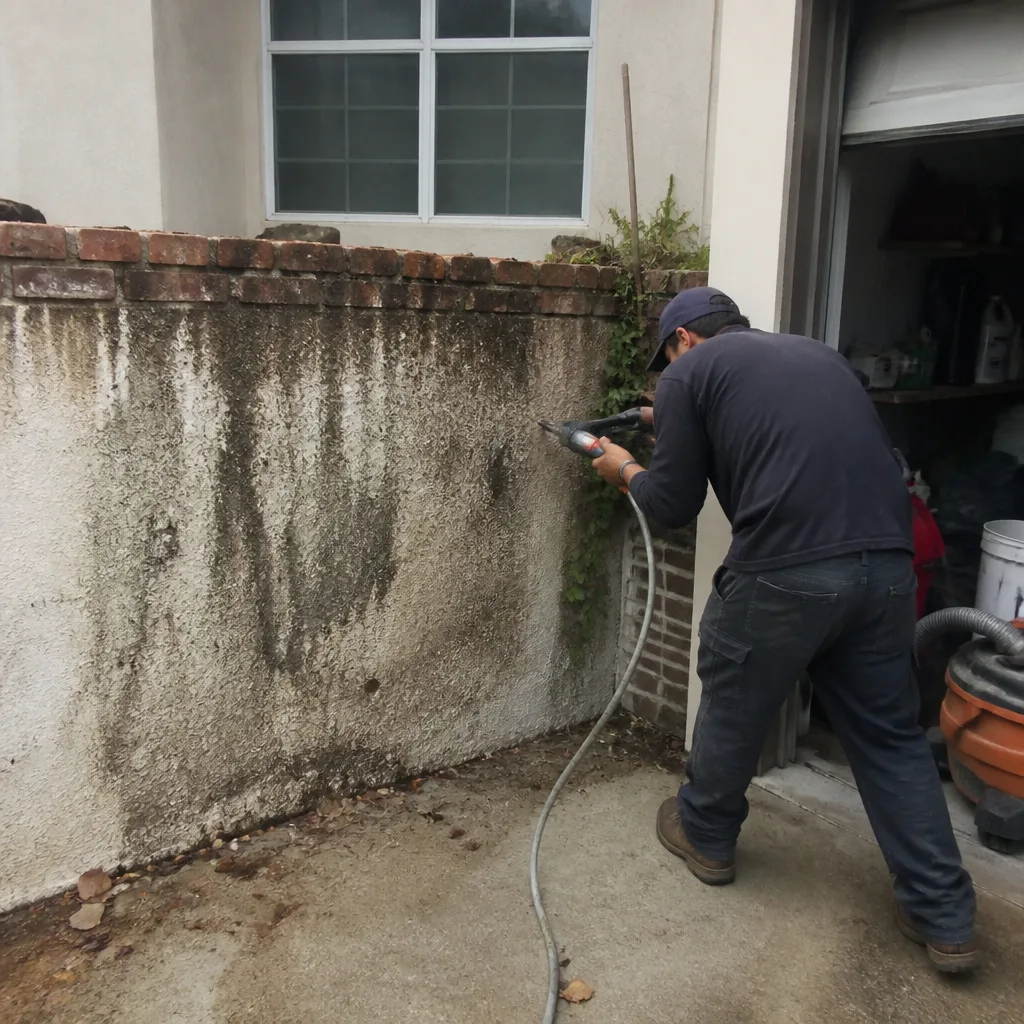 Before
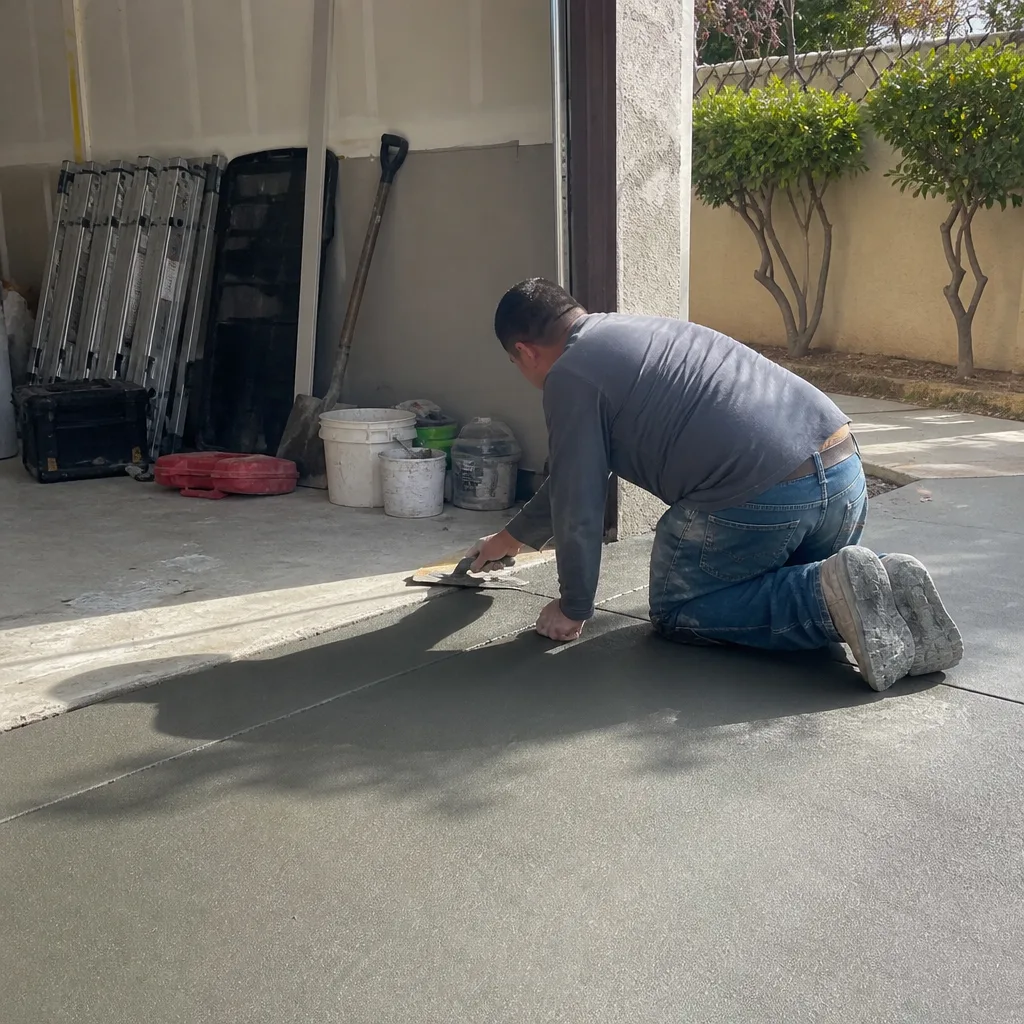 After
After Before
 After
After Before
 After
AfterWhen to Call a Professional
If you’ve spotted any of these warning signs on your own property, don’t wait for the problem to declare itself. Diagonal wall cracks, missing permits, unexplained material swaps, and lien exposure are not DIY situations, as we detail in DIY vs Professional Bathroom Remodeling: What’s Safe to Do Yourself. They’re situations where a professional evaluation saves you real money. At Sawyer Remodeling, the way we work addresses these failures directly: every project starts with a written price before work begins, every job runs on a documented schedule, and permit compliance is not a question, it’s the baseline. If you’re in Los Angeles and something about your project or your property feels off, call us at (254) 272-5876 for a free estimate and a straight answer. We’d rather spend an hour telling you it’s nothing than have you spend a year wishing you’d asked.
Frequently Asked Questions

In Los Angeles specifically, the most common warning signs are diagonal cracks from door and window corners indicating possible foundation movement, missing or expired permits visible on the LADBS portal, contractors who can’t provide lien releases after payment, and out-of-sequence work suggesting an overwhelmed GC. LA’s soil variability and active seismic environment make crack analysis more important here than in most markets. If you’re seeing any of these, call (254) 272-5876 for a professional evaluation.
Go to the LADBS website and use the public permit search tool. Enter your address and look for a permit matching your project’s scope, the contractor’s name, and a status of “issued” or “open.” If there’s no permit for work that requires one, your contractor is working illegally, and your insurance likely won’t cover damages. You can check this yourself anytime without calling anyone.
No. Hold final payment until the final inspection is marked as passed on the LADBS portal and you have unconditional lien releases from every subcontractor and supplier. In Los Angeles, the final passed inspection is your only independent confirmation that the work met city building standards. Paying before it passes means you lose your last piece of leverage.
A diagonal crack running from a door or window corner usually means the framing is moving under load, which points to foundation settlement or inadequate lateral bracing, both of which are more serious in LA because of expansive soil and seismic activity. Measure the crack, photograph it, mark the ends, and check again in 30 days. If it’s growing, call a structural professional before doing any cosmetic work.
A lien release is a written document proving a subcontractor or supplier has been paid and waives their right to place a mechanic’s lien on your property for that payment period. In California, if your GC doesn’t pay their subs, those subs can lien your home even if you paid the GC in full. Always request a conditional lien release before each payment and an unconditional release after it clears.
Watch for out-of-sequence work like cabinets installed before electrical inspections, drywall hung before plumbing pressure tests, and days with no activity followed by rushed, sloppy finishes. These are the patterns of a GC who can’t stay present because they’re spread across too many jobs. A good contractor runs your project on a named schedule, and they can tell you what’s happening tomorrow.
The Bottom Line
Construction warning signs in Los Angeles are legible if you know what to read. The walls tell you about structure: diagonal cracks, stairstep stucco patterns, and seams that open and stay open. The process tells you about the contractor: permits that don’t exist, lien releases that never arrive, communication that drifts into vagueness, and work that happens out of order. The homeowner who checks the LADBS portal weekly, demands paper on every payment, and insists on a written schedule is the homeowner who doesn’t end up in a lien dispute or a foundation lawsuit. In this city, the most valuable remodeling skill is not design taste. It’s the ability to spot the warning sign before it becomes an invoice.
Written by Luca Romano, Owner at Sawyer Remodeling, serving Los Angeles since 2005.