Last updated October 9, 2026






Free written scope consultation - allowances, timeline, and change-order rules on paper before a single trade is scheduled
DIY vs Professional Construction: The Los Angeles Homeowner’s Decision Guide
California requires a licensed contractor for any home improvement project exceeding $500 in combined labor and materials. That threshold is not a suggestion buried in fine print – it’s Business and Professions Code section 7048, and most Los Angeles homeowners cross it before they’ve even bought their tile. This guide walks through what the law actually says, what LA’s seismic and fire environment changes about risk, how unpermitted work shows up at resale, and where an experienced DIYer can still legally and safely do the work themselves. For more on what’s safe to do yourself, see our companion guide.
Styles & brands we work with



Quick Answer
In Los Angeles, any construction project over $500 in combined labor and materials legally requires a licensed California contractor – doing it yourself past that threshold, without an owner-builder permit, violates state law and can void your homeowners insurance and complicate resale. For small cosmetic repairs under $500, DIY is legally fine. For structural, electrical, plumbing, and most remodeling work, the legal and financial risk of DIY outweighs the savings in nearly every scenario we’ve seen across Los Angeles.
Table of Contents
- What California Law Actually Says About DIY Construction
- Why Los Angeles Is Harder on DIY Than Most Cities
- The Insurance Gaps Most LA Homeowners Don’t Discover Until a Claim
- How Unpermitted DIY Work Shows Up at Resale in the LA Market
- The Honest Competency Framework: What You Can Legally and Practically Do
- How to Be an Informed Owner-Builder in California
- When Hiring a Professional Is the Cheaper Option
- Common Mistakes to Avoid
- When to Call a Professional
- Frequently Asked Questions
- The Bottom Line
What California Law Actually Says About DIY Construction
The $500 threshold in California Business and Professions Code section 7048 is the starting point, but it’s not the whole story. That number includes all materials and labor for a single project – so a ceiling fan install that costs $180 in parts plus your weekend is technically DIY-legal if you do it yourself. But the moment you hire an unlicensed handyman to help and the combined cost crosses $500, both of you are in violation. The penalty for the unlicensed operator can be a misdemeanor, and the homeowner can end up liable for worker injuries because unlicensed workers aren’t covered by workers’ compensation insurance.
Los Angeles County enforces this actively. The Contractors State License Board (CSLB) runs stings throughout the county, and LA’s Department of Building and Safety (LADBS) flags unpermitted work during code enforcement sweeps. We’ve watched homeowners in neighborhoods like Silver Lake and West Adams get hit with stop-work orders on DIY plumbing and electrical jobs because a neighbor reported unpermitted activity. The fine structure varies, but the real cost is the delay and the required remediation.
Which Projects Legally Require a Licensed Contractor Regardless of Skill
- Any structural modification – load-bearing wall removal, foundation work, seismic retrofitting, room additions. No exception exists for skill level.
- Electrical panel changes, new circuits, and subpanel installation – LA County requires permits and licensed electricians for anything beyond like-for-like device replacement.
- Plumbing beyond fixture replacement – moving drain lines, repiping, water heater installation, gas line work (gas is its own licensing category in California).
- Roofing on structures over a certain square footage – LA requires a C-39 roofing license for anything beyond minor patching.
- HVAC installation or duct modification – requires a C-20 license in California.
- Any work valued over $500 where you hire help – even if that help is a neighbor you pay cash.
In practice, our team at Sawyer Remodeling regularly fields calls from LA homeowners who started a project believing it was DIY-legal, only to discover mid-demolition that they needed a permit, a licensed contractor, and a correction that cost more than the original job. The General Contractor in Los Angeles role exists because California’s regulatory framework is deliberately strict – and LA’s enforcement is real.
Why Los Angeles Is Harder on DIY Than Most Cities
Los Angeles is not Austin or Phoenix. Two environmental forces shape every construction decision here: seismic activity and wildfire exposure. A DIY framing error in a seismic zone can mean the difference between a house that rides out a 6.0 and one that shifts off its foundation. LA’s building code is among the strictest in the country for seismic bracing, shear wall requirements, and foundation anchoring – and those requirements apply even to work that looks cosmetic on the surface.
Take a simple bathroom remodel in Los Angeles. You’re not just swapping tile. You’re potentially disturbing wall assembly that includes shear paneling, and if you remove drywall, LADBS wants to know whether the underlying framing meets current seismic codes. If it doesn’t, your permit triggers a retrofit requirement. That’s not a DIY-friendly surprise.
Wildfire zones add another layer. Homes in the Very High Fire Hazard Severity Zone (VHFHSZ) – which includes large swaths of the Santa Monica Mountains, parts of Sherman Oaks, Studio City, and the San Fernando Valley foothills – have specific exterior material requirements. Products like James Hardie siding, which Sawyer Remodeling installs, meet the noncombustible standards, but a DIYer who throws up any available siding from a big-box store can install material that fails inspection and creates a fire risk. Same with roofing: in fire zones, LA requires Class A roof assemblies. Brands like GAF, CertainTeed, Owens Corning, and Tamko manufacture Class A products, but the installer needs to know the specific assembly requirements – underlayment, edge details, venting – for the zone to pass.
This is the part most DIY guides miss. The question isn’t “can you physically do it?” It’s “does your work product meet LA’s environmental performance standards?” In our experience across Los Angeles, the answer for most structural, roofing, and exterior work is that professional installation is the only reliable path to passing inspection.
The Insurance Gaps Most LA Homeowners Don’t Discover Until a Claim
Here’s the scenario we hear about most often from Los Angeles homeowners: they DIY a project, something goes wrong months later, they file a claim, and the insurance company denies it because the work was unpermitted or unlicensed. Not because the work caused the damage – because the work existed.
California insurers have tightened their underwriting substantially since the wildfire losses of 2018 – 2020. Many policies now include exclusions for damage related to unpermitted construction, and some carriers will non-renew a policy if unpermitted work is discovered during a claim inspection. We’re not alarmists; we’ve seen it happen to homeowners in Eagle Rock and Atwater Village who did their own water heater replacements and later had a leak claim denied because no permit was pulled.
The Three Insurance Gaps That Catch DIYers
- Unlicensed labor on your property isn’t covered. If you hire a handyman without a license and they get injured on your property, your homeowners insurance may not cover their injury because you hired illegally. You’re personally liable.
- Unpermitted work voids coverage for related damage. A DIY electrical job that later causes a fire gives the insurer a reason to deny the claim, even if the fire was caused by something else. The presence of unpermitted work taints the entire claim in the carrier’s eyes.
- DIY work on high-risk systems (roof, electrical, plumbing) can non-renew your policy. LA carriers are actively inspecting properties and flagging unpermitted work. A roof replaced without a permit is a red flag that can result in non-renewal.
The protection against all of this is documentation. A licensed contractor pulls permits, passes inspections, and leaves a paper trail. Sawyer Remodeling’s Sawyer Remodeling home process includes permit handling on every applicable project because we know that in Los Angeles, the permit file is what stands between you and a denied claim.
How Unpermitted DIY Work Shows Up at Resale in the LA Market
Los Angeles is a disclosure state. When you sell a home, you must complete a Transfer Disclosure Statement (TDS) that asks, among other things, whether any work was done without a permit. Lying on the TDS is fraud and can follow you for years after the sale. Most LA sellers check “yes” when they’ve done unpermitted DIY work – and that answer becomes a negotiation lever for the buyer.
We’ve watched this play out in the LA market. A house in Highland Park with an unpermitted converted garage sells for $80,000 to $120,000 less than the same house with a permitted conversion. In Northeast LA, buyers are unusually sophisticated about permits – they’ll pull the permit history from LADBS before making an offer. If the history is clean, the house commands a premium. If it’s not, the buyer asks for a price reduction or a retrofit to code, which costs more retroactively than it would have originally.
In the condo and townhome market across Los Angeles, the issue is even more acute. HOAs often require proof of permits for any interior work affecting common elements, and a DIY bathroom remodel without permits can stall a sale entirely. The resale cost of unpermitted work is not hypothetical in Los Angeles – it’s a line item in real estate negotiations that routinely runs five figures.
The practical takeaway: if you plan to sell a Los Angeles home within ten years, treat permits and licensed work as an investment in resale value, not an optional cost. The Home Renovation in Los Angeles projects that pay off most at resale are the ones with clean paper trails.
The Honest Competency Framework: What You Can Legally and Practically Do
We’re not anti-DIY. We’re anti-surprise. Here’s the honest breakdown of what an experienced DIYer can tackle in Los Angeles without running into legal or practical trouble, and what carries real risk in this city’s seismic and fire environment. Our DIY vs Professional General Contractor guide covers similar ground for larger projects.
Legally and Practically DIY-Friendly (Under $500, No Permit Required)
- Interior painting – no permit needed in LA, and the stakes are low. Buy quality paint, watch a few technique videos, and don’t rush the prep.
- Cabinet hardware replacement – swapping knobs and pulls is cosmetic and risk-free.
- Fixture replacement like-for-like – replacing a faucet with a faucet, a light fixture with a light fixture, without moving plumbing or wiring. Stay under $500 and you’re legal.
- Caulking and minor tile repair – re-caulking a tub or replacing a few cracked tiles is cosmetic and within scope.
- Landscaping and hardscape under certain thresholds – LA allows some landscape features without permits, but retaining walls over 4 feet require engineering.
The Gray Zone: Where an Experienced DIYer Can Work, But Needs a Permit
- Bathroom refresh without moving plumbing – replacing vanity, toilet, and fixtures in place is technically possible as DIY if you stay under $500, but most LA bathrooms cross that threshold quickly. Once you’re replacing tile, you’re likely over. And if you touch the waterproofing membrane (the layer that keeps water out of your subfloor and the unit below), you want a pro who knows Schluter edge trim and proper waterproofing methods. A failed membrane in a Los Angeles condo above another unit is a six-figure liability.
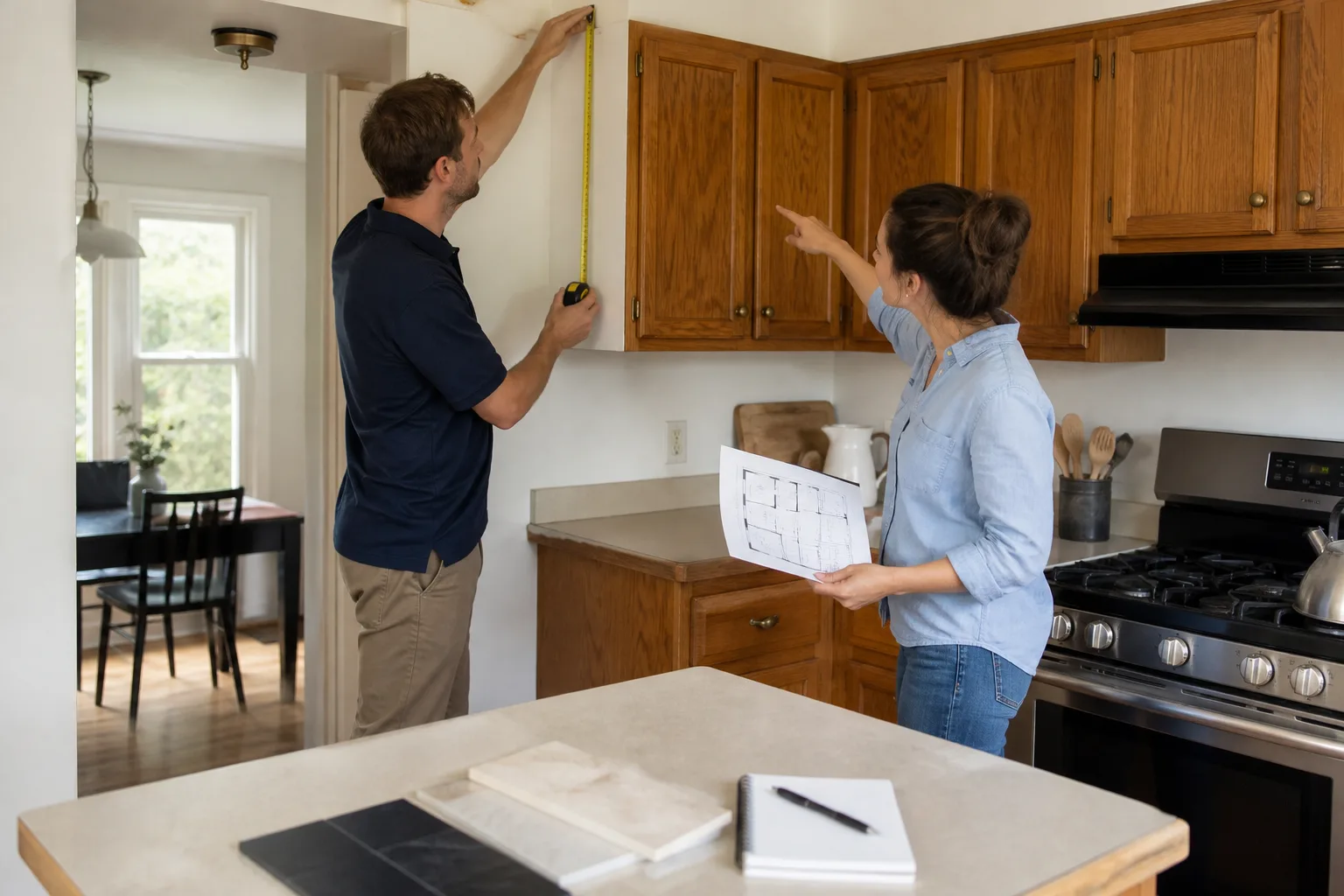
- Kitchen cabinet replacement without structural changes – possible as DIY, but the measurements and installation precision matter. Cabinet lines like KraftMaid and Wellborn have specific installation tolerances, and getting a cabinet wrong by a quarter inch compounds through the entire kitchen.
- Laminate and LVP flooring – DIY-friendly in most rooms, but LA moisture conditions, especially in beach-adjacent neighborhoods, require proper underlayment and expansion gaps. Get those wrong and you’re redoing the floor in a year.
Where DIY Carries Real Risk in LA Specifically
- Any structural work – wall removal, header installation, foundation repair. In an earthquake, this is the work that keeps you alive. Hire it out.
- Electrical panel work – even experienced DIYers should not touch a live panel in Los Angeles. The fire risk is real, and the insurance consequences of unpermitted panel work are severe.
- Roofing in any form beyond patching – LA fire zones require Class A assemblies, and the installation details for brands like GAF, CertainTeed, and Boral are specific. A failed roof in a rain event causes interior damage that insurance may not cover if the roof was unpermitted.
- Window and door replacement affecting exterior envelope – in LA, window replacement requires compliance with Title 24 energy standards, and in fire zones, the glazing and frame materials matter. Products from PGT and CGI are common in LA’s fire-prone areas, but the install specifics are beyond DIY scope for most homeowners.
- Gas line work of any kind – gas is a separate licensing category in California, and the risk profile is not worth it. A leak can kill. Hire a licensed plumber.
How to Be an Informed Owner-Builder in California
California does allow homeowners to act as their own general contractor through an owner-builder exemption. You can pull permits in your own name and manage subs yourself. But the law is specific, and most LA homeowners who attempt this don’t understand the obligations until they’re in trouble.
The Owner-Builder Rules That Matter
- You must occupy the property. The owner-builder exemption applies to your primary residence. You cannot owner-build a rental property or a flip.
- You’re limited in frequency. You can’t pull an owner-builder permit more than once every two years (with some exceptions). The state watches for people using the exemption to run an unlicensed contracting business.
- You’re legally responsible for the subs you hire. As the owner-builder, you’re the general contractor in the eyes of the law. If a sub isn’t licensed or insured, that’s on you. If a sub gets hurt, your homeowners insurance may not cover it because you’re acting as an employer without workers’ comp coverage.
- You bear all liability for defects. If the work fails, there’s no contractor warranty to fall back on. You eat the cost of the fix, and in resale, you disclose that you were the builder.
- You must manage inspections and corrections. LADBS will inspect the work. If it fails, you’re responsible for fixing it and scheduling re-inspection. This is where most owner-builders give up – the back-and-forth with inspectors is a full-time job in itself.
Our honest take: the owner-builder path makes sense for a homeowner who is retired, has construction management experience, and is renovating a small scope with simple trade work. For everyone else in Los Angeles, the time cost and liability usually erase the savings. Sawyer Remodeling’s Bathroom Remodeling in Los Angeles service exists precisely because coordinating permits, inspections, trades, and corrections is a profession, not a weekend project.
When Hiring a Professional Is the Cheaper Option
Los Angeles homeowners often compare material costs against contractor quotes and conclude that DIY is cheaper. The comparison is incomplete. Material cost is one line item. The full cost picture includes:
- Tool purchase or rental – a tile saw, wet saw, breaker bars, and specialty plumbing tools add $300 to $800 to a project before you start.
- Mistake correction – we regularly see DIY tile jobs that need full redos because the layout was wrong or the thinset coverage failed. The redo costs more than the original install would have.
- Permit penalties and stop-work delays – if LADBS catches unpermitted work, the stop-work order halts your project indefinitely. Time is money.
- Insurance premium increases or non-renewal – a post-claim discovery of unpermitted work can cost you years of higher premiums or force you into the surplus market.
- Resale discount – unpermitted work routinely reduces LA sale prices by five figures.
When you add those up for a typical Los Angeles bathroom remodel, the DIY savings usually vanish. Our fixed-price model at Sawyer Remodeling means the number we write down is the number you pay – no change orders, no surprise line items. That’s the financial clarity most LA homeowners actually need when they’re weighing DIY against hiring out.
Common Mistakes to Avoid
- Assuming the $500 threshold doesn’t apply because “it’s just me.” The law applies to project value, not who does the work. A $2,000 DIY tile job is still illegal without a permit or owner-builder status.
- Hiring an unlicensed “handyman” for work over $500. In Los Angeles, this is the most common way homeowners end up with shoddy work and zero recourse. Unlicensed operators can’t get permits, can’t pass inspections, and can’t be held to warranty standards.
- Doing electrical or plumbing work without understanding LA’s code amendments. LA is stricter than the California baseline in several areas, particularly seismic bracing and fire-zone materials. A generic YouTube tutorial doesn’t reflect LA code.
- Skipping permits to save time. Permits in LA are not optional for most work, and the retroactive permit process is more expensive and more invasive than pulling the permit upfront.
- Underestimating waterproofing requirements in wet areas. The most common DIY failure we see in Los Angeles is a bathroom shower pan that leaks into the unit below or the crawlspace. Waterproofing is a system – membrane, edges, corners, drainage – and the details matter.
- Assuming insurance covers DIY mistakes. Most policies have exclusions for work performed by unlicensed individuals, even if the damage is accidental. The gap only becomes visible at claim time.
- Tackling fire-zone exterior work with generic materials. LA’s VHFHSZ rules require specific material classes for roofing and siding. Installing non-compliant materials is both a fire risk and a resale liability.
When to Call a Professional
Call a professional when the work touches structure, electrical, plumbing, gas, roofing, exterior envelope, or any system where failure means injury or significant property damage. Our General Contractor Maintenance Checklist for Los Angeles Homeowners can help you stay ahead of problems. In Los Angeles, that’s most remodeling work. Call when the project requires a permit, and you don’t want to manage owner-builder responsibilities. Call when you need the work done right the first time, with a paper trail that protects your insurance standing and resale value. Sawyer Remodeling offers free estimates in Los Angeles – call (254) 272-5876 to get a written price before any work starts.
Frequently Asked Questions
In Los Angeles, professional bathroom remodels typically run $18,000 to $45,000, while a DIY version of the same project might cost $8,000 to $15,000 in materials – but the DIY number doesn’t include tool costs, mistake correction, permit penalties, or the resale discount for unpermitted work. The real comparison should include those hidden costs, which usually narrow or erase the gap. Call (254) 272-5876 for an exact quote on your project – estimates are free.
No, if your bathroom remodel includes plumbing changes, electrical work, or structural modifications, a permit is required in Los Angeles, and doing the work without one violates state law and LADBS regulations. A cosmetic refresh that doesn’t touch plumbing, electrical, or walls can be DIY-legal if it stays under $500. Call (254) 272-5876 to confirm whether your specific scope needs a permit.
You must disclose unpermitted work on the Transfer Disclosure Statement, and buyers in Los Angeles routinely request permit histories from LADBS before making offers. Unpermitted work typically results in a price reduction, a retrofit requirement, or both – we’ve seen deductions of $80,000 to $120,000 on converted garages in Highland Park. The cleanest path is pulling permits upfront.
Most California homeowners policies exclude damage related to unpermitted or unlicensed construction, and some carriers will non-renew a policy if unpermitted work is discovered during a claim inspection. The protection against this is documented, permitted, licensed work with a paper trail. Call (254) 272-5876 if you’re weighing DIY against professional work – we can help you understand the risk profile.
The owner-builder exemption allows a homeowner to pull permits in their own name and act as their own general contractor for their primary residence, but it comes with strict limits: you must occupy the property, you can only pull an owner-builder permit once every two years, and you’re personally liable for subs, defects, and inspection corrections. It’s a legal path, but rarely a good one for a homeowner with a full-time job.
In Los Angeles, permitted bathroom remodels, permitted kitchen updates, and code-compliant ADUs consistently deliver the strongest resale returns because LA buyers are unusually permit-savvy. Unpermitted versions of the same projects sell at a discount. Sawyer Remodeling has been serving Los Angeles since 2005, and we pull permits on every applicable project for exactly this reason.
The Bottom Line
The DIY-vs-hire decision in Los Angeles is a legal and financial question, not a skill contest. California’s $500 threshold, LA’s seismic and fire codes, insurance underwriting realities, and resale disclosure requirements combine to make most substantial construction work legally and practically a professional’s job. DIY remains a legitimate option for small cosmetic repairs and paint-level refreshes. For everything else – structural, electrical, plumbing, roofing, exterior, and full remodels – the licensed path is the cheaper path in Los Angeles. Know the law, know your actual skill, and don’t let a weekend project become a permanent liability. Browse our more guides & resources for Los Angeles homeowners.
Written by Luca Romano, Owner at Sawyer Remodeling, serving Los Angeles since 2005.
See the difference
 Before
 After
After Before
 After
After Before
 After
After