Last updated October 9, 2026
Free written scope consultation - allowances, timeline, and change-order rules on paper before a single trade is scheduled
DIY vs Professional Bathroom Remodeling: What’s Safe to Do Yourself
The most common insurance claim tied to bathroom remodels isn’t a jobsite injury. It’s water damage from a DIY tile or plumbing job that failed about 18 months after the “finished” photos were posted. Homeowners insurance carriers routinely deny those claims, classifying them as faulty workmanship rather than sudden damage. If you’re planning a Bathroom Remodeling services project in Los Angeles, that one scenario changes the entire cost equation. This guide walks through exactly where DIY work adds real value, where it quietly creates expensive hidden damage, and how California’s owner-builder rules shape what you can legally do yourself.
Quick Answer
Safe DIY bathroom work in California generally includes cosmetic swaps like vanities, mirrors, lighting, paint, and hardware - provided you’re not moving plumbing, electrical, or walls - but for anything beyond that, see our DIY vs Professional General Contractor: What’s Safe to Do Yourself guide. Anything involving waterproofing, shower pan construction, drain relocation, or in-wall plumbing belongs with a licensed contractor. The line isn’t your skill level; it’s the moment water or structure gets involved.
Styles & brands we work with

Table of Contents
- California’s Owner-Builder Rules for Bathroom Remodels
- What’s Actually Safe to DIY (And What It Really Saves)
- Why Waterproofing and Shower Pans Are the Hard No
- Acting as Your Own General Contractor: The Real Burden
- What Los Angeles Home Inspectors Look For at Resale
- The Honest Cost Math: DIY vs Professional in Los Angeles
- Step-by-Step: How to Scope Your Bathroom Remodel Without Getting Burned
- Material Choices That Hold Up: What We Specify and Why
California’s Owner-Builder Rules for Bathroom Remodels
California allows homeowners to act as owner-builders and pull their own permits for work on a home they live in. That’s the headline. The fine print is where most Los Angeles homeowners get into trouble, because the California Contractors State License Board (CSLB) and local building departments treat “owner-builder” as a formal legal status, not a casual label. If you pull an owner-builder permit for plumbing or electrical work, you are now legally responsible for that work passing inspection, and you assume liability for anyone you hire to help who isn’t a licensed contractor.
Here’s what that means in practical terms for a bathroom remodel:
- Cosmetic work generally needs no permit. Swapping a vanity, replacing a mirror, painting, installing new hardware, or replacing a light fixture in the same location doesn’t require a permit in most Los Angeles jurisdictions.
- Plumbing that stays in the same wall is the gray zone. Replacing a faucet or showerhead can be DIY. Moving a drain line, relocating a toilet flange, or adding a new shower valve requires a plumbing permit and, in many LA cities, the work must be performed by or overseen by a licensed plumber.
- Electrical work beyond fixture swaps needs a permit. Adding a recessed light, moving an outlet, or wiring a heated floor triggers electrical permit requirements. Los Angeles Department of Building and Safety (LADBS) is strict about unpermitted electrical, and inspectors do check.
- Structural changes always require permits. Moving a wall, cutting into floor joists for a drain, or enlarging a window means plans, a structural review, and inspections.
We’ve pulled enough permits in Los Angeles to know that LADBS inspectors are thorough and sometimes unpredictable with owner-builder work. They can ask for documentation that a first-time owner-builder won’t have. That doesn’t mean don’t do it. It means go in with your paperwork organized and a clear scope of work.
What’s Actually Safe to DIY (And What It Really Saves)
The honest answer: DIY saves real money on about 15 to 20 percent of a bathroom remodel’s scope, and that scope is almost entirely cosmetic. The savings come from labor you’d otherwise pay $75 to $150 per hour for in the Los Angeles market. Here’s where the math works in your favor:
- Vanity replacement (4 to 8 hours). A prefabricated vanity with an integrated top is a weekend project. You’re saving roughly $400 to $700 in labor. The risk is minimal if your existing water lines and drain align with the new vanity’s cutouts. If they don’t, stop and call a plumber before you start cutting into walls.
- Mirror and lighting replacement (2 to 3 hours). This is the single safest DIY task in a bathroom remodel. Remove the old mirror, patch the anchor holes, hang the new one. For lighting, kill the breaker, swap the fixture, restore power. Savings: $200 to $400.
- Paint and trim (1 to 2 days). Bathrooms are small, so paint is cheap and fast. Use a bathroom-rated paint with a satin or semi-gloss finish that resists moisture. Savings: $300 to $600.
- Hardware and faucet swaps (2 to 4 hours). Towel bars, robe hooks, and cabinet pulls are zero-risk. A faucet swap is moderate risk: it’s fine if you have basic mechanical sense and the shutoff valves under the sink still work. If the shutoff valves are corroded, the project just became a plumbing call.
One caveat we stress to homeowners in Los Angeles: the age of the house changes everything. In a 1920s bungalow in Angelino Heights or a 1950s ranch in the Valley, the plumbing behind a “simple” vanity swap is often galvanized steel that’s been corroding for 60 years. The moment you touch it, it can crack. DIY assumes the infrastructure cooperates. Older LA homes don’t always cooperate.
Why Waterproofing and Shower Pans Are the Hard No
Tile work itself is learnable for a patient DIYer. What isn’t learnable from YouTube is proper waterproofing, and a beautiful tile job over failed waterproofing is a slow-motion insurance claim. The failure happens behind the tile, invisible for a year or two, and by the time water stains appear on the ceiling below, the repair is full demolition, not touch-up. That’s why we tell every Los Angeles homeowner: waterproofing is not a skill-level decision, it’s a risk-level decision.
Here’s what proper waterproofing in a shower actually involves:
- A sloped pan or prefabricated shower base. Water must flow toward the drain at roughly a quarter inch per foot. A flat pan means standing water, which means mold and eventual failure.
- A continuous waterproofing membrane. Whether it’s a membrane sheet or a liquid-applied system, it must run continuously up the walls behind the tile and tie into the pan without gaps.
- Corner and seam reinforcement. Every plane change in a shower is a weak point. Proper waterproofing uses reinforcing banding or specialized compounds at every corner, niche, and bench edge.
- A flood test before tile goes in. Any reputable contractor or careful DIYer fills the shower pan with water and marks the level, waits 24 hours, and confirms it holds. Skipping this test skips the only verification step that catches leaks before they’re buried under tile.
We specify Schluter systems (the orange membrane boards and edge trim you’ve probably seen at the tile store) on our shower remodels because the manufacturer’s warranty requires their certified installation methods, which is a second layer of accountability beyond our own. A homeowner who installs Schluter themselves gets no manufacturer warranty. That’s a detail most DIY guides skip.
Acting as Your Own General Contractor: The Real Burden
Some Los Angeles homeowners don’t want to swing a hammer at all, but they do want to save the general contractor’s markup by hiring trade subs directly, a topic we explore in depth in our DIY vs Professional Construction: The Los Angeles Homeowner’s Decision Guide. That’s a legitimate path under California’s owner-builder system. It’s also a second job, and the burden is heavier than most people estimate.
Here’s the workload, honestly laid out:
- Subcontractor sourcing and vetting. You’ll need a licensed plumber, licensed electrician, a tile contractor or drywaller, a concrete or pan specialist if you’re building a custom shower, and possibly a framing carpenter. Each one needs license verification through the CSLB website, references, and a written scope of work.
- Permit navigation. You’ll pull plans, pay fees, schedule inspections, and be onsite for each inspection. LADBS inspection windows are typically four-hour blocks, which means time off work.
- Scheduling and sequencing. Trades don’t self-coordinate. If the plumber runs two days late, the tile setter doesn’t just wait, they go to their next job and come back in two weeks. You manage that calendar.
- Liability absorption. As the owner-builder, you carry the liability if a worker is injured on your property. A licensed general contractor carries workers’ compensation insurance. You do not.
- Change order resolution. When the electrician discovers a code issue behind the wall, you negotiate that fix. A GC does this daily; you’ll do it once and learn on the fly.
The savings from acting as your own GC in Los Angeles is typically 10 to 20 percent of the project total, which on a $28,000 bathroom remodel means $2,800 to $5,600. Whether that’s worth 100+ hours of coordination and the liability exposure depends on your schedule and risk tolerance. For some homeowners it’s absolutely the right call. For most, the math lands closer to break-even once you factor in your own time.
What Los Angeles Home Inspectors Look For at Resale
When you sell a home in Los Angeles, the buyer’s home inspector will flag unpermitted bathroom work. It’s not a maybe, it’s a when. LA inspectors are trained to spot the tells, and the tells are usually visible.
Here’s what they’re looking for:
- Tile over drywall in a shower surround. A properly waterproofed shower uses cement board or a membrane board as the substrate. If an inspector sees regular gypsum board behind loose tile (often visible at the trim plate or edge), they’ll flag it as a likely leak risk.
- No GFCI protection. Bathroom outlets require GFCI protection under current code. A DIY electrical swap that skipped this is an instant red flag.
- Drain lines that don’t match. If the toilet flange looks newer than the house’s plumbing style, or the shower drain position doesn’t align with the original layout, inspectors will ask whether permits were pulled.
- Evidence of active moisture. Dark stains on the ceiling below a bathroom, bubbling paint, or a musty smell in the subfloor area all prompt closer inspection. The inspector’s job is to find water damage.
Unpermitted work doesn’t automatically kill a sale, but it gives the buyer leverage for price reductions and it can delay closing if the buyer’s lender requires permit retroactive approval, which LADBS does offer but which takes time and fees. In a hot Los Angeles market, sellers sometimes get away with it. In a balanced market, unpermitted bathroom plumbing becomes a negotiation anchor against you.
The Honest Cost Math: DIY vs Professional in Los Angeles
Let’s put real numbers on the table, because the range matters more than the average. These reflect current Los Angeles market pricing for bathroom remodels as of this writing:
| Scope | DIY Cost (Materials Only) | Professional Cost (Installed) | Realistic Savings |
|---|---|---|---|
| Cosmetic refresh: paint, hardware, mirror, lighting | $800 – $1,600 | $2,500 – $4,000 | $1,700 – $2,400 |
| Vanity replacement (prefab, no plumbing moves) | $600 – $1,200 | $1,800 – $3,000 | $1,200 – $1,800 |
| Full gut remodel: new shower, tile, plumbing, electrical | $8,000 – $15,000 (materials + sub labor) | $22,000 – $38,000 | $10,000 – $18,000 (minus your time and liability) |
| Shower pan replacement only | Not recommended | $4,000 – $8,000 | N/A – this is a professional-only scope |
The full-gut number looks like a huge savings until you subtract the cost of your own hours, the tools you’ll buy and never use again, the materials wasted on first-timer mistakes, and the risk of a waterproofing failure that costs $12,000 to remediate. We’ve been called to fix DIY shower pans in Los Angeles more times than we can count. The homeowner saved $5,000 on the original install and spent $14,000 on the teardown and rebuild. That’s not a hypothetical; it’s a recurring pattern.
Step-by-Step: How to Scope Your Bathroom Remodel Without Getting Burned
Whether you go DIY, act as owner-builder, or hire a General Contractor in Los Angeles, the scoping process is the same. Here’s the sequence we recommend:
- Define what’s actually changing. Write down every item: are you moving the toilet? Changing the shower valve? Relocating a wall? If the answer to any of those is yes, you’re in permit territory.
- Determine your hard budget before you get attached to materials. Los Angeles bathroom remodels run $200 to $400 per square foot for professional work, depending on finish level. A 50-square-foot bathroom at mid-range finishes lands around $14,000 to $20,000. Know that number first.
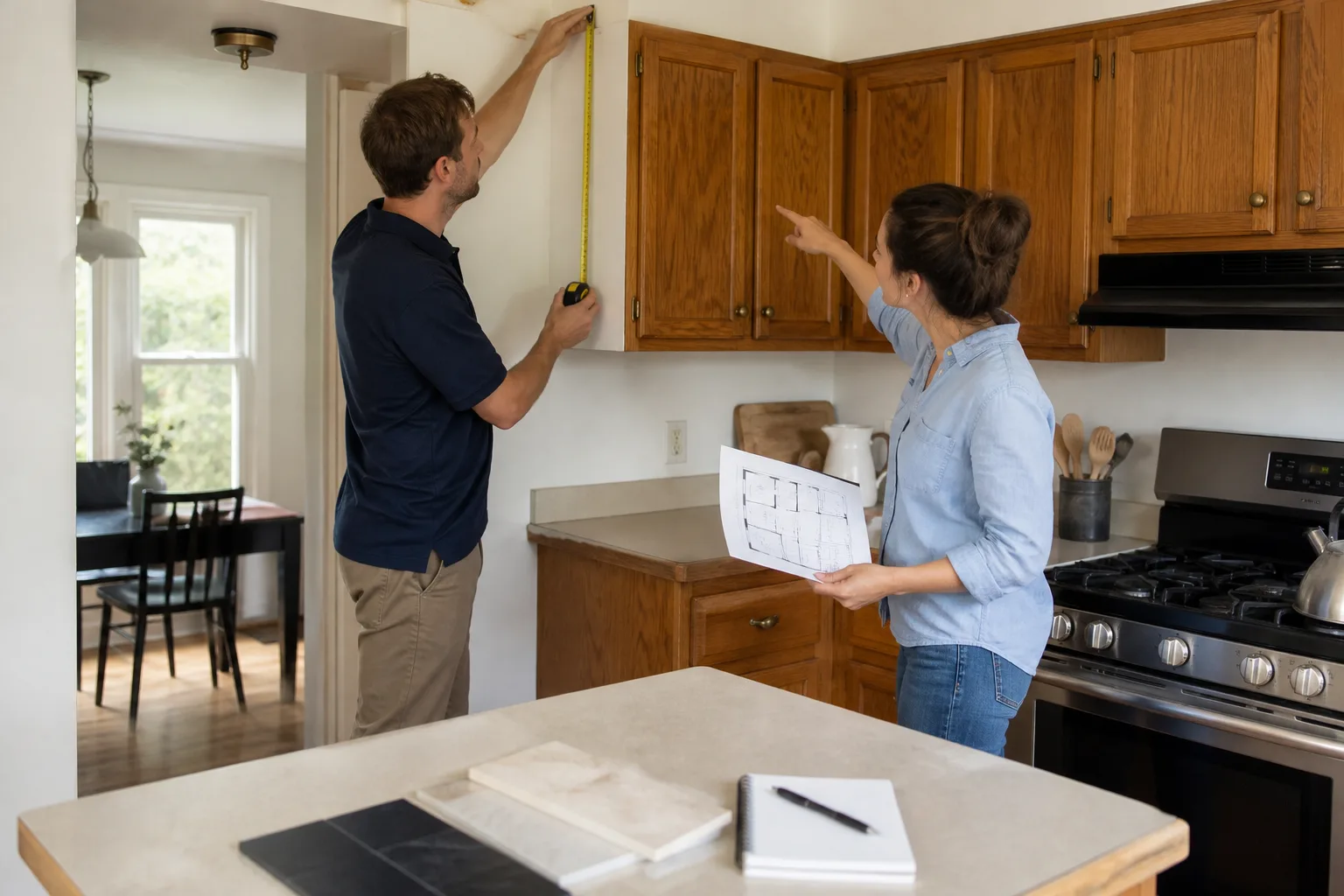
- Decide your role. Are you doing cosmetic work and hiring pros for the rest? Are you owner-building the whole thing? Are you hiring one firm to handle it all? Be honest about your time.
- Verify licenses before you pay anyone. CSLB license lookups are free and instant. Any contractor doing work over $500 in California must be licensed. If they’re not, you have almost no recourse if the work fails.
- Get the price in writing. Not an estimate. A written price with a stated scope. If a contractor won’t put it in writing before work starts, that’s your signal to walk.
For readers who want the full breakdown of what a professional remodel in this market actually costs, our Bathroom Remodeling in Los Angeles guide covers pricing detail by scope. If you’re weighing a bathroom update against broader work, our Home Renovation in Los Angeles page explains how to think about sequencing and budget allocation.
Material Choices That Hold Up: What We Specify and Why
When you DIY, the material decision is yours alone, which is the point of DIY. But certain choices reduce risk on a bathroom remodel, and these are the ones we’ve landed on after years of Los Angeles jobs:
- Schluter waterproofing membranes and edge trim. The orange membrane system has become the standard for a reason: it’s designed as an integrated waterproofing system, not a series of independent products. We use it because the system approach removes most of the human-error variables. The metal edge trim (Schluter profile strips) also eliminates grout lines at tile edges, which are a common failure point in bathrooms.
- Grohe or Moen valves over off-brand. The shower valve is the one component buried inside the wall. You cannot service it without opening the wall. We’ve seen off-brand valves fail within five years, and the repair costs more than the original faucet. Moen and Grohe both have field-proven cartridges and lifetime warranties from manufacturers who are still in business.
- Sterling shower bases for standard sizes. If you’re not building a custom tile floor, a prefabricated Sterling shower base removes the shower pan failure risk entirely. They’re inexpensive, dimensionally stable, and they’re built for the mass market because they work. For a DIY remodel, a prefab base is the single smartest choice you can make.
The material partners we use on professional remodels include those three plus a broader roster, but for a DIY job the principle is the same: buy materials from companies that warranty against failure, because in a bathroom, a material failure often looks just like a workmanship failure and insurance won’t cover either one.
Common Mistakes to Avoid
- Tile over drywall in a shower. This is the number one DIY mistake we repair in Los Angeles, and it always fails. Always. Use cement board or membrane board.
- Assuming a vanity swap is “just a vanity swap” in an old house. In pre-1970 LA homes, touching the shutoff valve often breaks the old galvanized line behind the wall. Test the shutoffs before you commit to the project.
- Not pulling a permit for plumbing that moved. In Los Angeles, unpermitted plumbing is discoverable at resale and it’s a code violation. The permit fee is small; the leverage a buyer gets is not.
- Using mastic instead of thinset in wet areas. Mastic (pre-mixed adhesive) re-emulsifies when it gets wet. It’s fine for drywall backsplashes; it’s wrong for shower floors. Read the bucket label.
- Ignoring the flood test. If you do nothing else before tiling, fill the shower pan and wait 24 hours. Every professional does this. The cost of the test is one day; the cost of skipping it can be full tear-out.
- Not budgeting for the tool you’ll use once. A wet tile saw is $300 to $800. A diamond hole saw for the shower valve is $50. These add up, and they’re why the DIY “savings” number often shrinks by several hundred dollars.
- Taking a contractor’s word without a written price. If the number changes when work starts, that was the plan all along. Get the price in writing, with scope, before anyone is hired.
See the difference
 Before
 After
After Before
 After
After Before
 After
AfterWhen to Call a Professional
Call a professional when the work touches waterproofing, in-wall plumbing, drain relocation, electrical circuits, or structural framing. Call one when the house is old and the infrastructure behind the wall is unknown. Call one when you don’t have 100 hours to coordinate permits and subs. And call one when you want a written price, a written guarantee, and a company accountable for the result. Sawyer Remodeling offers free estimates for bathroom remodels throughout Los Angeles. Call (254) 272-5876 and we’ll give you a written price before any work starts. No pressure, no surprises, just numbers on paper.
Frequently Asked Questions
Yes, California’s owner-builder rules allow you to pull permits and act as your own contractor on a home you live in. Cosmetic work needs no permit at all. Plumbing, electrical, and structural work require permits, and once you act as owner-builder you carry the liability. Start with cosmetic work and bring in licensed pros for anything involving water lines, drains, electrical circuits, or structural changes.
A professional bathroom remodel in Los Angeles runs $200 to $400 per square foot depending on finish level, with a typical 50-square-foot bathroom landing between $14,000 and $20,000. Cosmetic-only refreshes can run $2,500 to $4,000. Full-gut remodels with custom tile and plumbing relocation run $22,000 to $38,000. For an exact quote, call (254) 272-5876 for a free estimate.
Tile installation is a learnable skill, but waterproofing a shower correctly is a professional discipline, and a tile job over failed waterproofing leaks invisibly until the damage is severe. If you tile your own shower, use a prefabricated shower base and a continuous membrane system, and flood-test the pan for 24 hours before tiling. If the pan fails the test, call a professional before proceeding.
In Los Angeles, permits are required for relocating plumbing drains, adding or moving electrical wiring, any structural wall changes, and most shower pan replacements. Cosmetic swaps like vanities, mirrors, paint, hardware, and same-location fixture replacement generally don’t need permits. When in doubt, the LADBS website has a permit flowchart, or call a licensed contractor for a quick read.
Yes, and Los Angeles home inspectors specifically look for unpermitted bathroom plumbing and electrical work. Tile over drywall, missing GFCI protection, and mismatched drain lines are all red flags that give buyers leverage for price reductions. In some transactions, lenders will require retroactive permit approval before closing, which costs time and money.
The biggest mistake is tiling directly over drywall in a shower surround. We repair this constantly in Los Angeles homes of every age. Drywall wicks moisture, mold forms behind the tile, and within a year or two the wall disintegrates. Using the wrong substrate in a wet area converts a $3,000 professional tile job into a $12,000 tear-out and rebuild. Call (254) 272-5876 for a free assessment before you start.
The Bottom Line
DIY bathroom remodeling is smart money when you stay on the cosmetic side of the line: vanities, mirrors, lighting, paint, and hardware. It becomes a liability the moment you touch waterproofing, plumbing, or electrical. The homeowner insurance denial scenario is real, the LA inspector scenario is real, and the leaking shower pan scenario is the one we see weekly. If your remodel involves water management, get a written price from a licensed professional and compare it to the true cost of DIY, which includes your time, your tools, and your risk. For Los Angeles homeowners who want it done right the first time, Sawyer Remodeling gives you a written price before work starts and a 365-day guarantee after it’s done, and you can find more guides & resources on our blog. Call (254) 272-5876 for a free estimate.
Written by Luca Romano, Owner at Sawyer Remodeling, serving Los Angeles since 2005.