Last updated October 9, 2026




Free written scope consultation - allowances, timeline, and change-order rules on paper before a single trade is scheduled
Bathroom Remodeling Warning Signs Every Homeowner Should Know
If a contractor hands you a quote that says “materials TBD,” you’ve already seen the most expensive warning sign in remodeling. That phrase means the price you’re looking at is fictional, and the real number will arrive later, after demolition, when you have no leverage. We’ve spent nearly two decades remodeling bathrooms across Los Angeles, and the projects that go sideways almost always show their red flags before a hammer gets lifted. You just have to know where to look: the first phone call, the quote format, and what someone refuses to put in writing. This guide walks through every warning sign that matters, what each one actually costs you, and the questions that separate a professional from a problem in under a minute. For a deeper dive, see The Complete Bathroom Remodeling Guide for Los Angeles Homeowners.
Quick Answer
The clearest warning signs of a bad bathroom remodel appear before work starts: a verbal price instead of a written one, a quote with vague line items like “materials TBD,” a contractor who won’t itemize the scope, and no direct answers about who exactly will show up and when. If any of these show up, stop and ask harder questions. The cheapest bid in Los Angeles is usually the most expensive project you’ll ever sign.
Styles & brands we work with




Table of Contents
- Why a Verbal Price Is Structurally Designed to Grow
- What a Written Scope Must Include to Actually Protect You
- The Ghost Between Visits: Spotting a Contractor Who Will Disappear
- The Low-Ball Opener: How Demo-Only Quotes Trap Homeowners
- Legitimate Subcontractors vs. Day Labor on the Fly
- Three Questions to Ask Before Signing Anything
- Los Angeles-Specific Red Flags Most National Guides Miss
Why a Verbal Price Is Structurally Designed to Grow
A verbal estimate is not a discount. It’s a placeholder that lets the contractor discover the real price after you’re committed. In Los Angeles, where bathroom remodels routinely run from $18,000 to $45,000 depending on scope, a spoken number carries zero legal weight and even less practical weight. When the invoice lands $9,000 above what you remember hearing, you’ll have no document, no email, no text thread that pins the original figure. You’ll have a conversation you can’t prove.
Here’s what actually happens. A contractor walks your bathroom, listens to what you want, and says something like, “Probably around twenty, twenty-two.” That feels honest because it sounds approximate in a friendly way. But the word “probably” is doing heavy lifting. Under California law, a home improvement contract over $500 must be in writing, and Los Angeles building codes add their own layers of permits and inspections. A contractor who won’t put a price on paper before work starts is telling you something about how the rest of the project will operate.
We put the price in writing before any tools are picked up because the number on the invoice should be the number you approved. Not a base number that grows with every change order. That’s the standard every homeowner should demand in Los Angeles: a written price, itemized, with a scope attached.
What a Written Scope Must Include to Actually Protect You
A written scope of work is the difference between a contract and a suggestion. Without one, you’re not hiring a remodeler. You’re funding an improvisation. In our experience across Los Angeles, the homeowners who end up in disputes are almost always the ones who signed something vague. The fix is simple: require specificity before you sign, not after.
A legitimate written scope should include, at minimum:
- Demolition boundaries: exactly which walls, floors, and fixtures get removed, and which stay protected.
- Plumbing changes: whether pipes are being relocated, replaced, or left in place. Moving a toilet drain in Los Angeles can add $2,500 to $5,000 depending on slab work and access.
- Electrical scope: new circuits, GFCI placement, lighting layout, and whether the panel needs capacity work.
- Waterproofing method: the specific system, whether it’s Schluter edge trim (the metal strip that waterproofs where your tile meets the floor), a liquid membrane, or another named product.
- Tile and surface allowances: dollar figures per square foot, not just “tile included.” A shower with handmade tile can run triple the cost of subway tile, and that delta should be visible before work starts.
- Fixture and material brands: if you’re choosing from Kohler, Moen, or Grohe, the scope should say so. If it says “contractor’s choice,” you’ve got a problem.
- Permit and inspection language: who pulls the permit, who schedules the inspection, and what happens if the inspection fails.
- Payment schedule: tied to milestones, not dates. Money should move when work is verifiably complete.
We follow The Relay Visibility Guarantee on every project: a written price before work starts, live arrival time tracking, and before-and-after photo updates. That’s not a premium feature. It’s the minimum standard a Los Angeles homeowner should expect when spending five figures on a bathroom.
The Ghost Between Visits: Spotting a Contractor Who Will Disappear
The most common complaint we hear from Los Angeles homeowners isn’t about craftsmanship. It’s about silence. A contractor demoes the bathroom in two days, then vanishes for eleven. No call, no text, no update. The homeowner is left showering at the gym, staring at a gutted room, wondering if the crew is ever coming back. In remodeling, this pattern has a name: the ghost between visits.
The warning signs appear before you ever sign. Here’s how to spot a contractor who will disappear mid-project:
- They don’t ask about your schedule. A professional asks when you need the bathroom back and plans around it. A ghost doesn’t care because they haven’t planned anything.
- They can’t name the crew. Ask who will be in your home on day one. If they can’t give you names, they don’t have a crew. They have a Rolodex they’ll start calling after you sign.
- They communicate slowly before the contract. If it takes four days to get a callback while they’re trying to win your business, it will take two weeks once they’ve already got your deposit.
- They structure payments by date, not milestone. “50% at start, 50% at completion” is fine. “50% at start, 25% on day 15, 25% on day 30” means they get paid whether or not work happened.
- They shrug at the phrase “change order.” Every remodel has changes. A contractor who acts like scope never shifts is either lying or planning to charge you later for whatever they feel like.
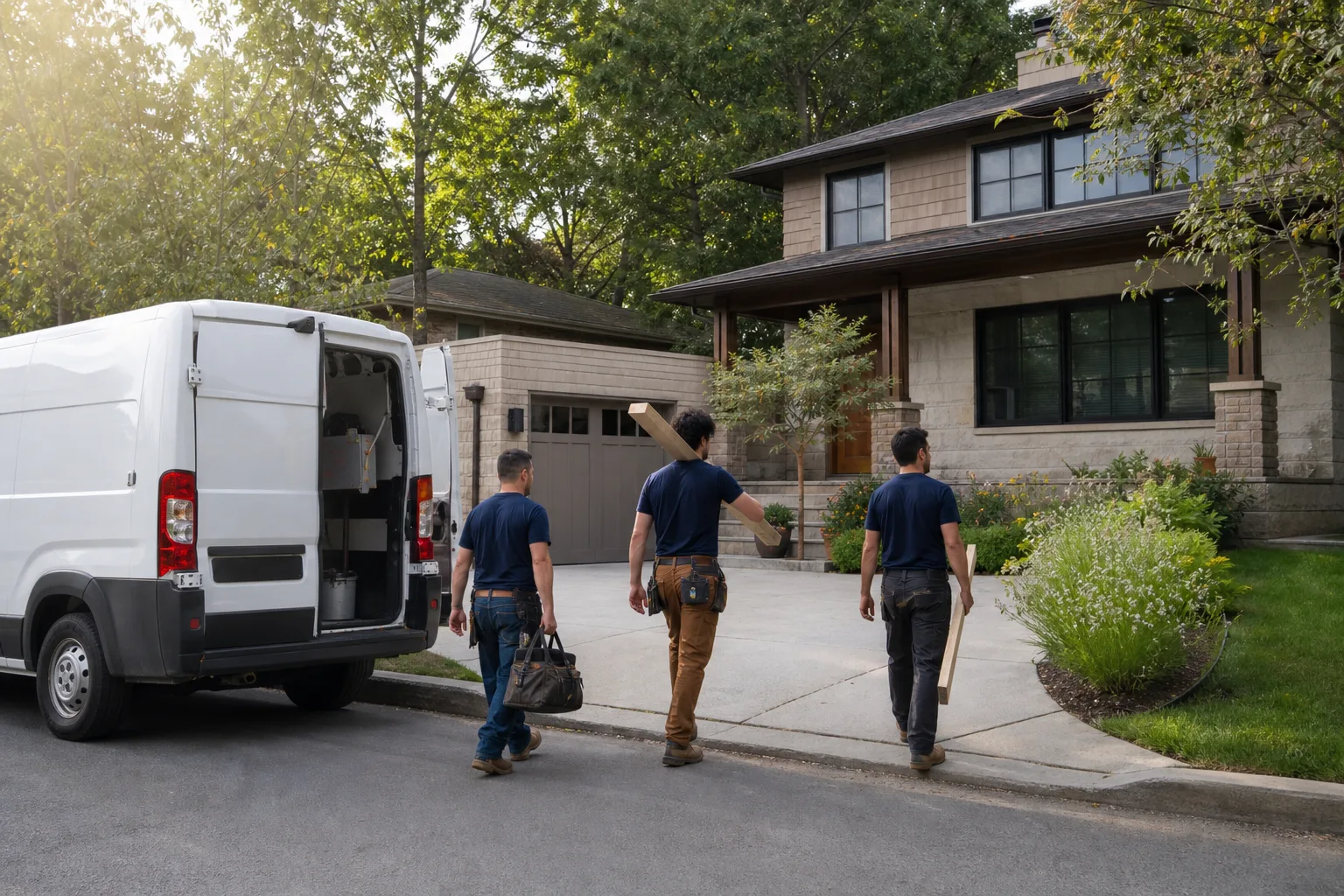
At Sawyer Remodeling, we run every job under The Relay Standard: live arrival time, photo updates before and after, and a digital invoice you pay from a link. You know who is coming, when they arrive, and what it costs. Background-checked, uniformed technicians show up when the schedule says they will. That’s the baseline, not the exception.
The Low-Ball Opener: How Demo-Only Quotes Trap Homeowners
There’s a specific playbook some Los Angeles contractors use to win bids, and it works because it exploits a completely reasonable hope: that your remodel will cost less than everyone else said it would. The playbook goes like this. You get three quotes. Two come in around $28,000 to $34,000 for the full job. The third comes in at $19,500. It looks like the winner. Then you read the fine print, and “the full job” isn’t what they priced. They priced demo, rough plumbing, and maybe drywall. Everything else: tile, fixtures, waterproofing, finish work, paint, trim, glass, hardware: is “to be determined.”
Here’s the math. Demo and rough-in might be 35% to 45% of a bathroom remodel. So that $19,500 quote covers the part of the job where the room gets destroyed. Once walls are open and your family is showering at a neighbor’s house, the change orders start. New waterproofing: $3,800. Tile labor the original quote “didn’t include”: $4,200. Fixture installation: $2,600. By the time the bathroom is usable, you’ve spent $32,000, just like the other two quotes said. Except now you’ve been through six weeks of uncertainty, three arguments, and a contractor who has you over a barrel.
The fix is to compare quotes line by line, not bottom line to bottom line. Ask every bidder, “What’s not in this number?” A professional will tell you directly. Someone running the low-ball play will get vague. That vagueness is your answer. At Sawyer Remodeling, our no-hassle upfront pricing means the written price covers the scope we agreed on. If something changes, we put the change order in writing before the work happens so you approve the number, not discover it.
Legitimate Subcontractors vs. Day Labor on the Fly
Most general contractors in Los Angeles use subcontractors. That’s normal and often desirable: a licensed plumber pulling your permit, an electrician wiring your sconces, a tile setter who does nothing but tile. The red flag isn’t subcontracted work. It’s subcontracted work with no structure, no vetting, and no accountability.
A legitimate subcontractor relationship looks like this: the general contractor has worked with the plumber for years, knows the quality of their work, schedules them in advance, and stands behind their portion of the job. If the tile cracks six months later, the general contractor is the one you call, and they’re the one who makes it right. Their name is on the project.
A day-labor operation looks different. The contractor quotes your bathroom, then starts making calls the week the project begins. Whoever answers gets the work. Nobody is vetted beyond a phone conversation. If the tile work fails, the contractor shrugs and says, “That was my tile guy, I’ll see if he can come back.” You’re not holding anyone accountable. Nobody’s name is on the project.
Ask directly: “Who is doing the tile, and how long have you worked with them?” The contractor’s answer will tell you more than any review site. A professional names names and gives you a history. A problem starts hedging. At Sawyer Remodeling, our technician team is background-checked and uniformed. Subcontractors we engage for specialized trades are people we’ve worked with across enough projects to know their work holds. If it’s not done right, the 365-Day Done Right Promise means we make it right, in writing, on every project.
Three Questions to Ask Before Signing Anything
You don’t need to become a construction expert to protect yourself. You need three questions that expose how a contractor actually operates. Ask these before you sign, and the answer will tell you more than a portfolio ever could. For more guides & resources on hiring smart, explore our blog.
- “Will you put the full price and scope in writing before I sign?” If the answer is anything but an immediate yes, walk. A written price before any work starts isn’t a favor; it’s the law in California for jobs over $500, and it’s the only way to know what you’re actually paying. Anyone who hedges on this is planning to grow the number later.
- “Who exactly will be in my house, and when will they arrive?” A professional knows their schedule. They can tell you the crew lead’s name, the arrival window, and how they’ll communicate if something shifts. A contractor who says “we’ll figure that out” is telling you they run projects reactively, and you’re the one who pays for the inefficiency.
- “What do you do if something isn’t right after the job is done?” Listen for specifics. A guarantee that’s just a sentence on a website doesn’t help you. You want to hear how long it lasts, what it covers, and whether it’s written into the contract. Our 365-Day Done Right Promise covers a full year after the project closes, and it’s on paper. If a contractor can’t answer this simply, they don’t have an answer.
Los Angeles-Specific Red Flags Most National Guides Miss
Los Angeles has its own remodeling culture, and it produces warning signs you won’t find in a generic national guide. Some are about building codes. Some are about how old housing stock behaves. All of them affect your wallet. For help vetting who you hire, read Choosing the Right Construction Brand: A Buyer’s Guide for Los Angeles.
The pre-1980 bathroom wild card. A huge share of Los Angeles homes were built between 1920 and 1979. These bathrooms often hide cast iron drain pipes that have corroded from the inside, galvanized supply lines full of rust, and framing that’s been cut into over decades of repairs. A contractor who’s remodeled five bathrooms in Los Angeles knows to look for these. One who only works in newer construction will quote you a beautiful number and then “discover” $7,000 in pipe replacement after demo. Ask your contractor what they typically find behind the walls in bathrooms your home’s age, and what it costs to fix.
The unpermitted-flip handoff. Los Angeles has a substantial number of homes where a previous owner remodeled without permits. Sometimes that work is cosmetic and fine. Sometimes the plumbing or electrical wasn’t done to code, and your new bathroom remodel inherits the liability. A responsible contractor checks for existing permit history and raises the issue before demolition starts. A careless one opens the wall, finds unpermitted wiring, and tells you the price just went up.
The “seismic upgrade” upsell by omission. Some contractors use the city’s earthquake retrofit requirements as a way to pad a bathroom quote without explaining what’s actually required. Retrofits are important, but they’re scoped separately from a bathroom remodel. If someone tells you your bathroom can’t be remodeled without a full-house seismic job, get a second opinion.
The material access fog. Los Angeles has more tile showrooms, plumbing supply houses, and surface fabricators than almost any city in the country. That’s good: it means you can choose from Cambria, Caesarstone, and Silestone countertops, Kohler and Toto fixtures, and tile from local distributors. That’s also bad: an unscrupulous contractor can claim materials are “on backorder” and push you toward something cheaper that they mark up. A professional gives you written line-items before you commit and can tell you exactly which showrooms stock what.
This is the kind of context that only comes from working hundreds of bathrooms in the same city’s housing stock. It’s also why our our Bathroom Remodeling services include a detailed walkthrough before the quote, so the written price accounts for the house you actually own, not an ideal version of it.
Common Mistakes to Avoid
- Choosing the lowest bid without comparing scopes. A low number that omits waterproofing, finishes, and fixtures isn’t cheaper. It’s an incomplete quote. In Los Angeles, the median bathroom remodel runs between $25,000 and $40,000 for a full gut. If a bid comes in at $12,000, the scope is missing something major.
- Signing a contract that doesn’t list material allowances. “Tile: allowance” is not a price. Require dollar amounts, per square foot, named brands where applicable. KraftMaid and Wellborn cabinetry cost what they cost; you should see those numbers spelled out.
- Paying too much upfront. California law caps the down payment for home improvement contracts at 10% or $1,000, whichever is less. If a contractor asks for 40% “to cover materials,” they’re either uninformed or breaking the law. Either way, do not sign.
- Ignoring the permit conversation. Some Los Angeles homeowners let a contractor talk them into skipping permits to save $1,500. That savings evaporates when a future buyer’s inspection finds unpermitted work, or worse, when a plumbing failure causes damage your insurer won’t cover because the work wasn’t permitted.
- Assuming all “licensed” contractors are equal. A license means someone passed a test and carries a bond. It doesn’t mean they communicate well, run a schedule, or stand behind their work. Your three questions will tell you more than the license number.
- Not asking about the warranty in writing. “We guarantee our work” means nothing if it’s not scoped to a time period and written into the contract. Get the guarantee in writing, with a duration, before you sign.
- Remodeling around a fixture you hate. You’d be surprised how many homeowners keep a terrible toilet or a cramped vanity because replacing it feels like scope creep. It’s not. While the room is open, the marginal cost of swapping a fixture is small compared to doing it later.
See the difference
 Before
 After
After Before
 After
After Before
 After
AfterWhen to Call a Professional
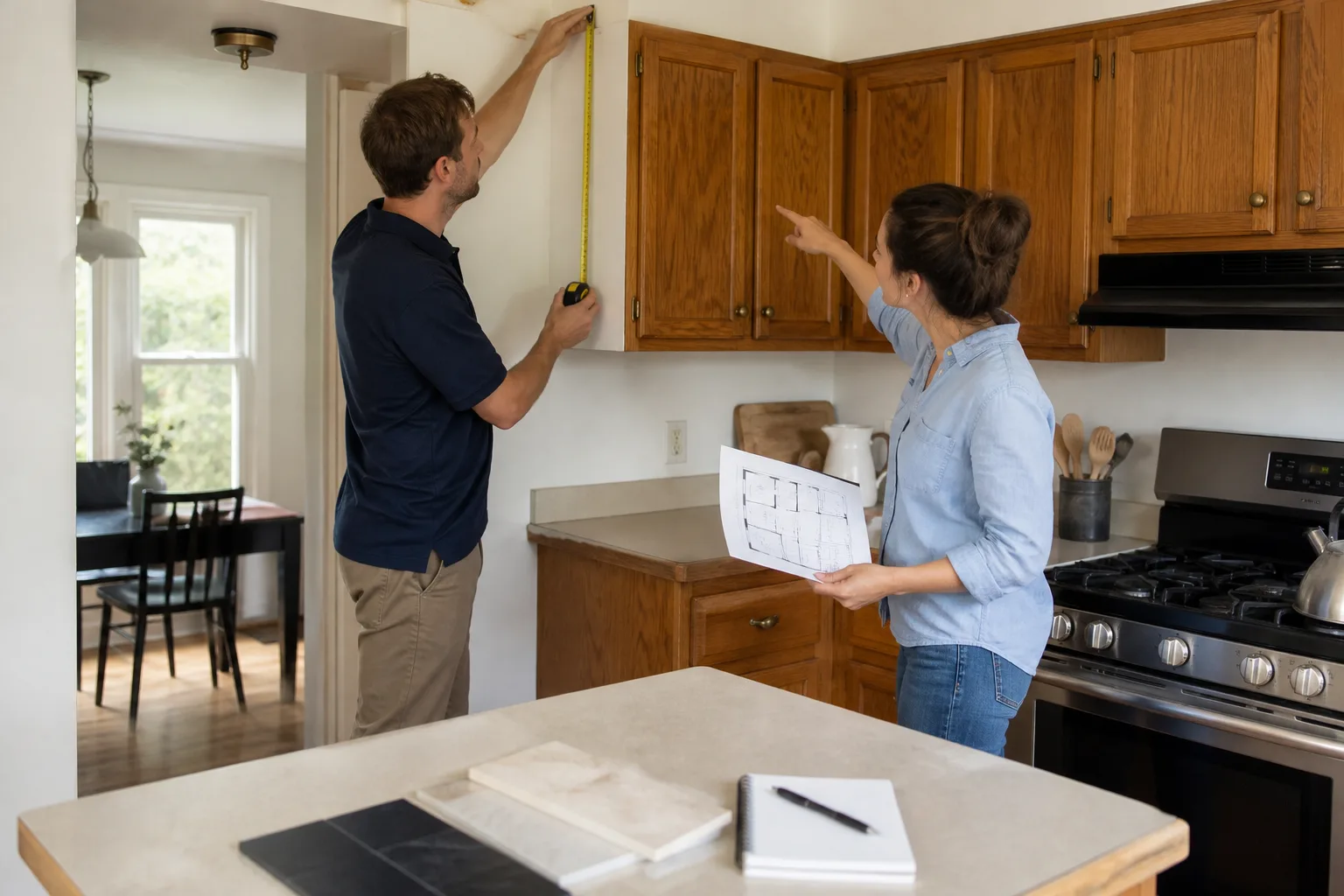
Some bathroom issues are DIY-appropriate: swapping a showerhead, caulking a seam, painting a wall. But the moment a remodel involves moving plumbing, opening walls, waterproofing a shower, or touching electrical, you need a licensed contractor. A shower that leaks because the waterproofing was done wrong can destroy subflooring, joists, and the ceiling below, and that repair bill will dwarf the cost of doing the remodel correctly the first time. Also call a professional when a previous remodel shows signs of failure: cracked grout that keeps returning, tile that’s popping loose, or a persistent musty smell in a bathroom that was supposed to be sealed. These are not cosmetic issues. They’re structural. Sawyer Remodeling offers free estimates in Los Angeles, call (254) 272-5876 to schedule yours.
Frequently Asked Questions

A full bathroom gut remodel in Los Angeles typically runs $25,000 to $40,000, with smaller updates like a tub-to-shower conversion running $12,000 to $18,000 and a full primary bath with custom tile and premium fixtures reaching $45,000 to $60,000 or more. The spread depends on plumbing movement, waterproofing system, tile selection, and whether the room is in a pre-1980 home with older pipes. Get at least three written quotes and compare line items, not just bottom lines. Call (254) 272-5876 for an exact quote; estimates are free.
The most common mistake is signing a contract without a written, itemized scope, which leaves material allowances, waterproofing methods, and finish work unstated until the change orders start. In Los Angeles, where pre-1980 homes often hide corroded pipes and unpermitted prior work, an unscoped contract is a blank check. Always require a written price before work starts.
Yes. Los Angeles requires permits for any bathroom remodel that moves plumbing, changes electrical, or alters walls. A contractor who suggests skipping permits is saving you a small fee while exposing you to insurance denials, failed resale inspections, and code enforcement. A licensed contractor pulls the permit and schedules the inspection; ask about this before signing.
A standard full bathroom remodel in Los Angeles takes 3 to 6 weeks depending on scope, permit wait times, and material lead times. Custom tile, specialty fixtures, or a pre-1980 home with unexpected pipe work can push that to 8 weeks. A contractor who promises a complete gut in 7 days is either working without permits or planning to cut corners.
Look for a written price, an itemized scope, named material brands and allowances, a payment schedule tied to milestones, a permit plan, and a written warranty with a specific duration. If any of those are missing, don’t sign. The contract is the whole project on paper; if it’s vague, the work will be too. Call (254) 272-5876 if you want a second look at a contract before committing.
Many do, and it’s a reasonable expectation. A free estimate should include a walkthrough, a written price, and a conversation about scope. Be wary of any contractor who charges for an estimate but won’t provide a written, itemized quote at the end of it. Sawyer Remodeling offers free estimates in Los Angeles, call (254) 272-5876 to schedule one.
The Bottom Line
The warning signs of a bad bathroom remodel show up before the work does. A verbal price that “feels about right,” a quote with “materials TBD,” a contractor who can’t name the crew, a bid that’s 40% lower than the others because it only covers demolition: these aren’t minor quirks. They’re the project’s entire trajectory compressed into a single conversation. The fix is to demand what you’re owed as a Los Angeles homeowner paying five figures for a room you’ll use every day: a written scope, a written price, proof of who’s coming, and a written guarantee that survives the final walkthrough. Get those, and the remodel will be something you enjoy, not something you survive. If you’re looking for Bathroom Remodeling in Los Angeles, we’d be glad to walk you through the process in person. Or explore our Home Renovation in Los Angeles services if your project extends beyond the bathroom. As a General Contractor in Los Angeles, Sawyer Remodeling handles the full job under one roof, and you can always find us at the Sawyer Remodeling home page for more information.
Written by Luca Romano, Owner at Sawyer Remodeling, serving Los Angeles since 2005.